The presence of Israeli settlers is a heavy burden for Palestinian local residents who are being displaced from their own homes. In wide areas of the city, including the old city, many former Palestinian houses have been forciblyoccupied by Israeli settlers displacing entire native families. The presence of Israeli soldiers in the city have transformed it in a heavy militarized area where settlers can act violently against the city’s native population with impunity.
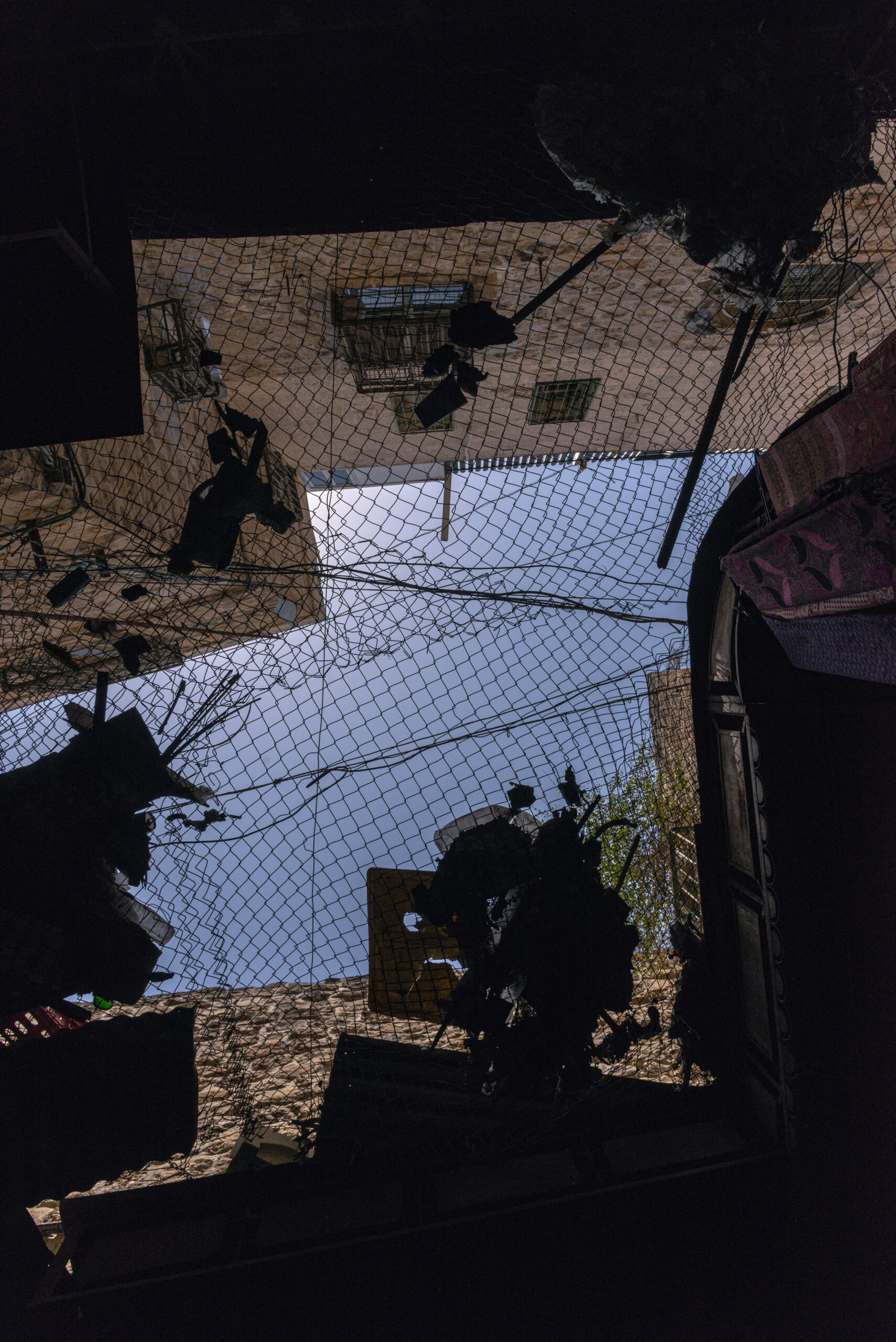
In the old city, many apartments on the upper floors of the buildings have been occupied. While walking through what remains of the rich market in the old city it is impossible not to notice the nets that separate the street level from upper floors. Palestinians have installed them to protect themselves from settlers tossing garbage from their windows upon them. As it is impossible and dangerous to remove it, the garbage remains on the nets for years. Furthermore, there’s plenty of stores that are closed, barred, often with materials and goods still inside.
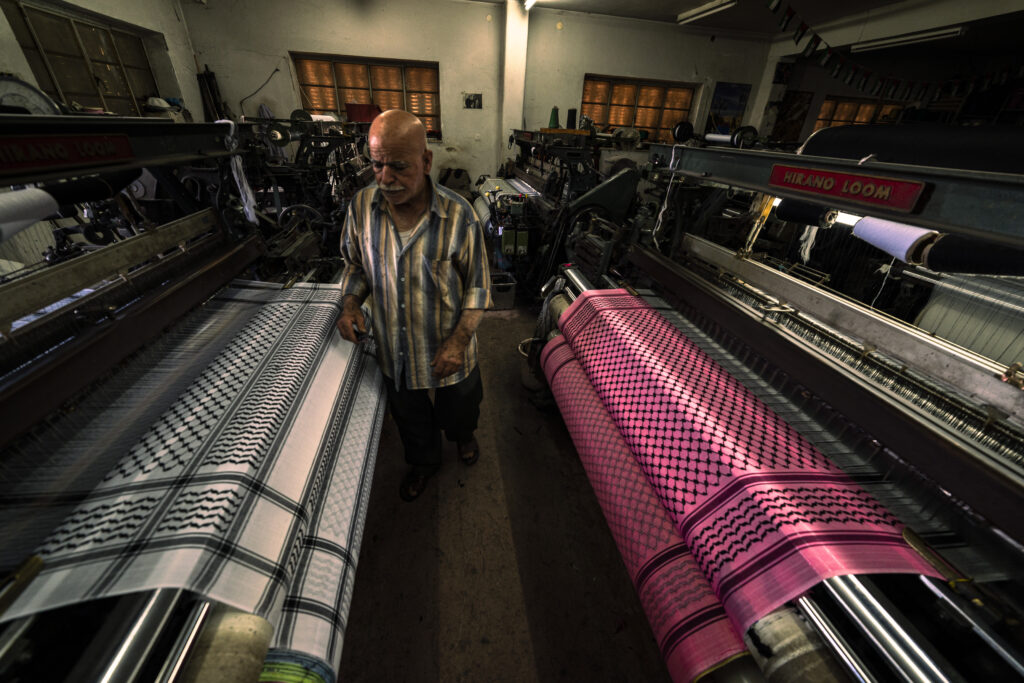
In this difficult-to-live-in environment, not fa from the old town, the last factory ofKufiyah continues to produce this symbol of Palestinian and Arab cultural heritage. Its decorations are reminiscent of fishing nets, a symbol of what Palestinian life was before the occupation forces denied them access to the sea, trade routes through Palestine, and olive leaves, a symbol of strength.
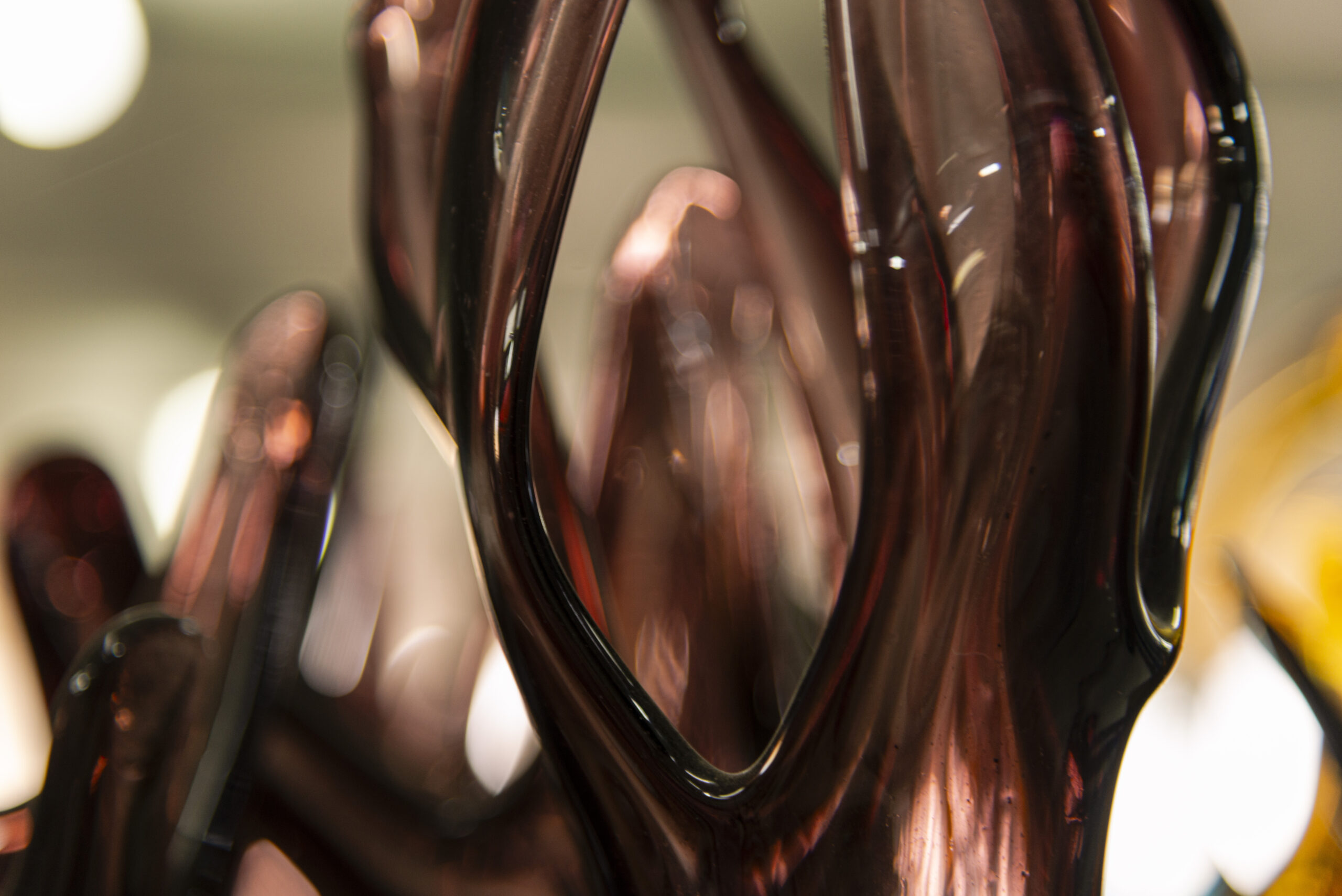
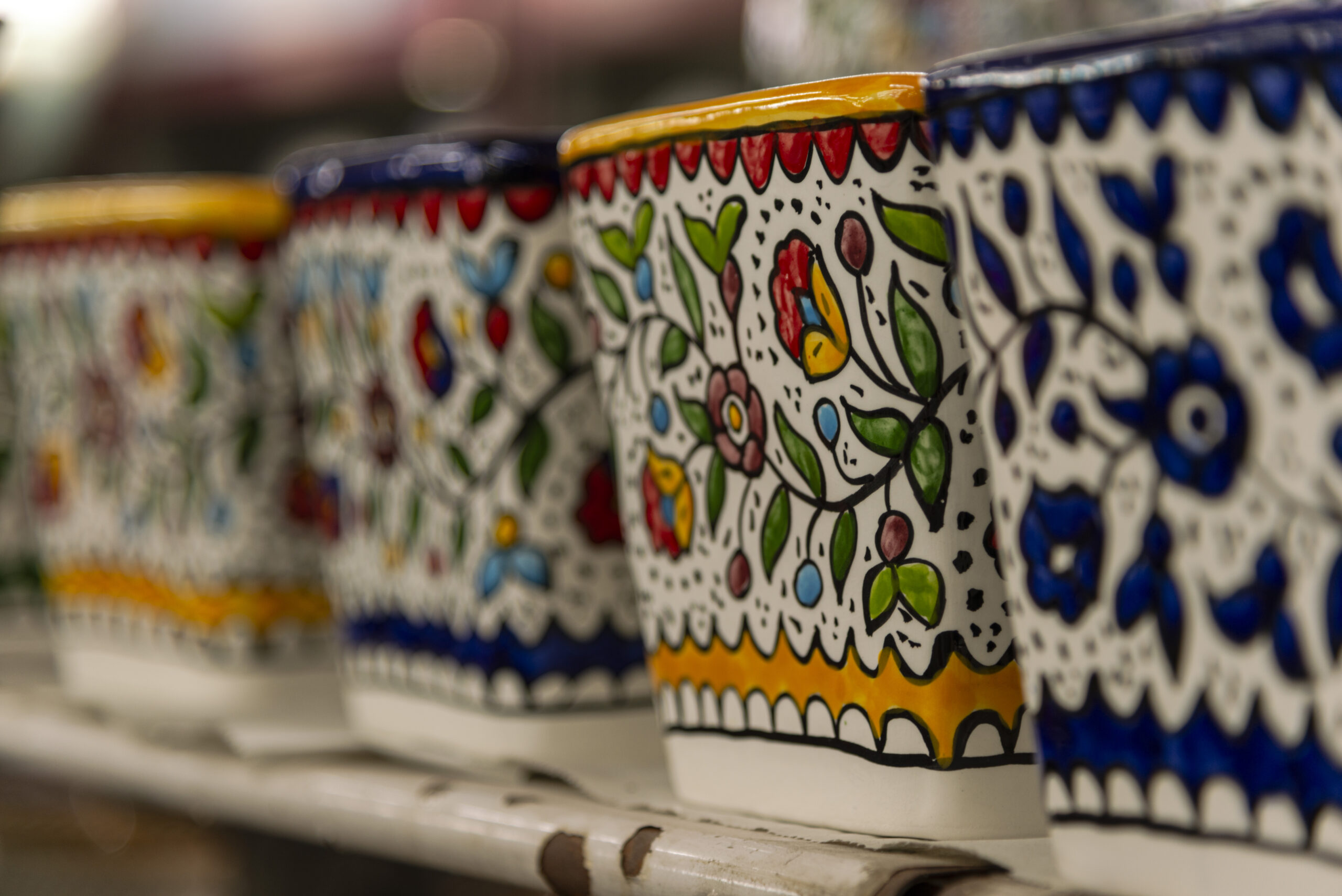
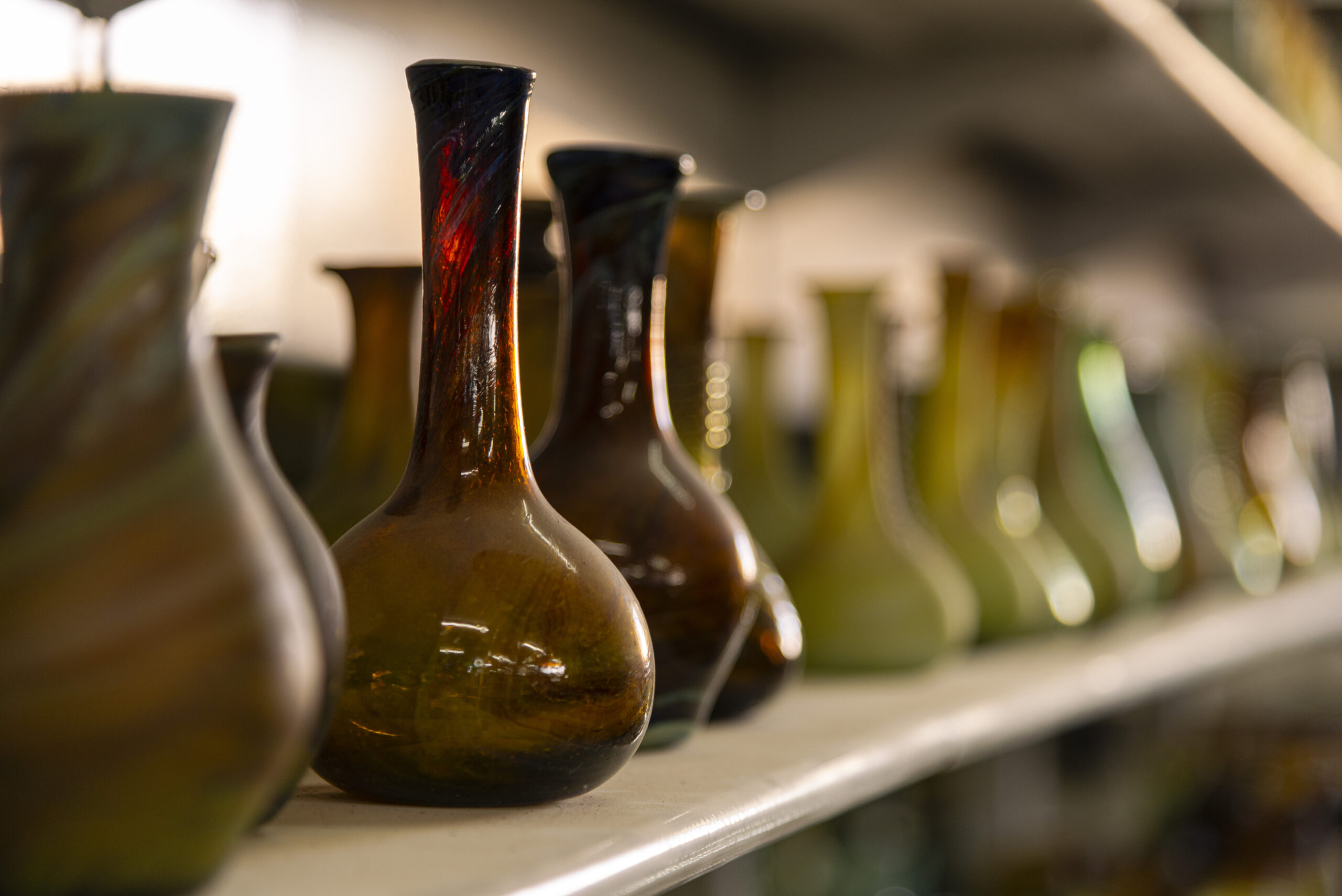
Along with the Kufiyah factory are many workshops for glassmaking, ceramics, terracotta. Hebron, in spite of everything, is still an important economic center, a symbol of Palestinian resistance and resilience to a violent colonization project that penetrates the city streets, the houses and impedes people’s freedom of movement by means of roadblocks and checkpoints.
A net shelters Palestinian residents of Hebron's Old City from being thrown by settlers illegally occupying houses on the upper floors of buildings.
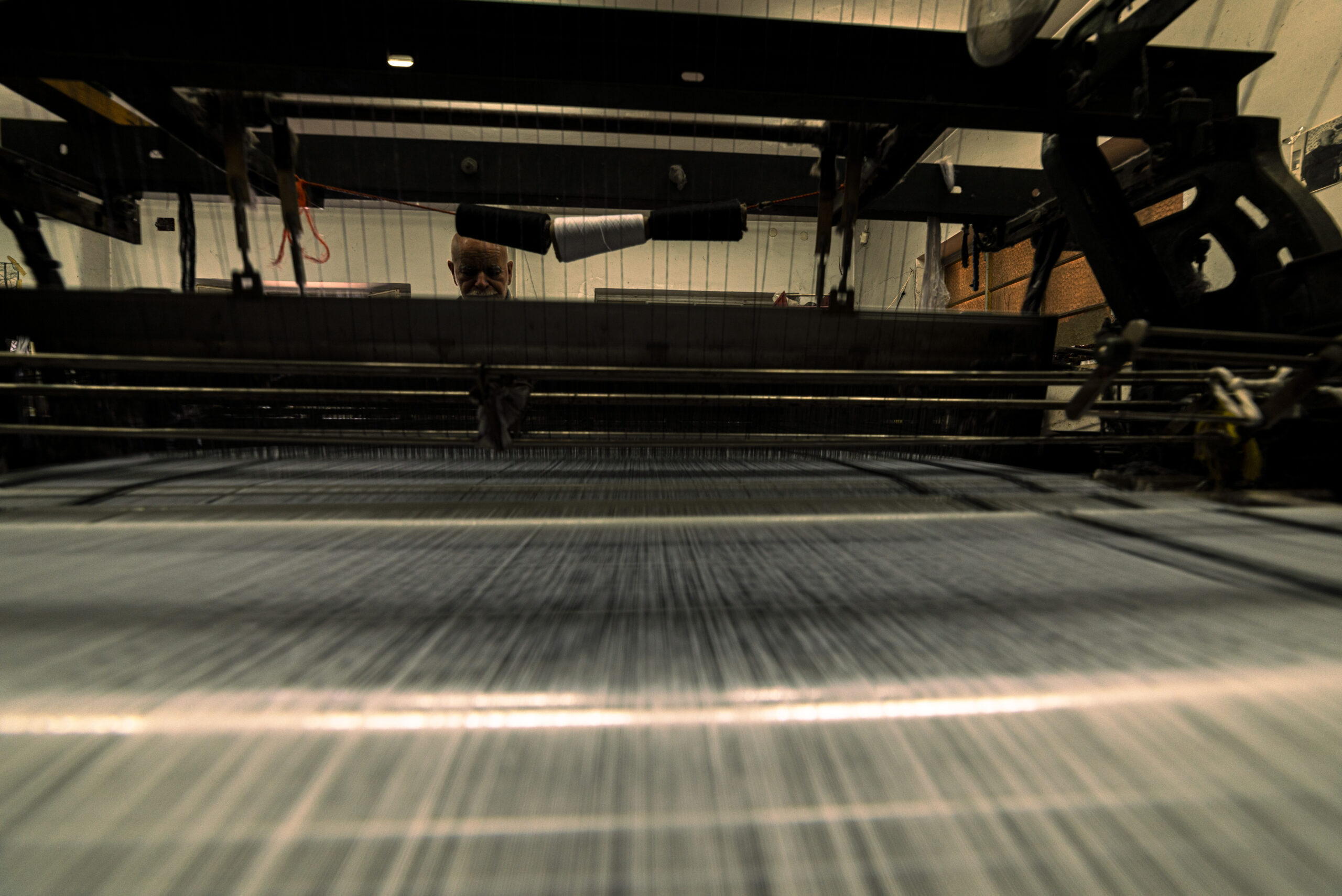
Kufiya's latest factory in Hebron. Inside are several looms, modern ones along with some more dated ones.
At the entrance to the factory, Kufiyahs of all types and colors can be found in the store.
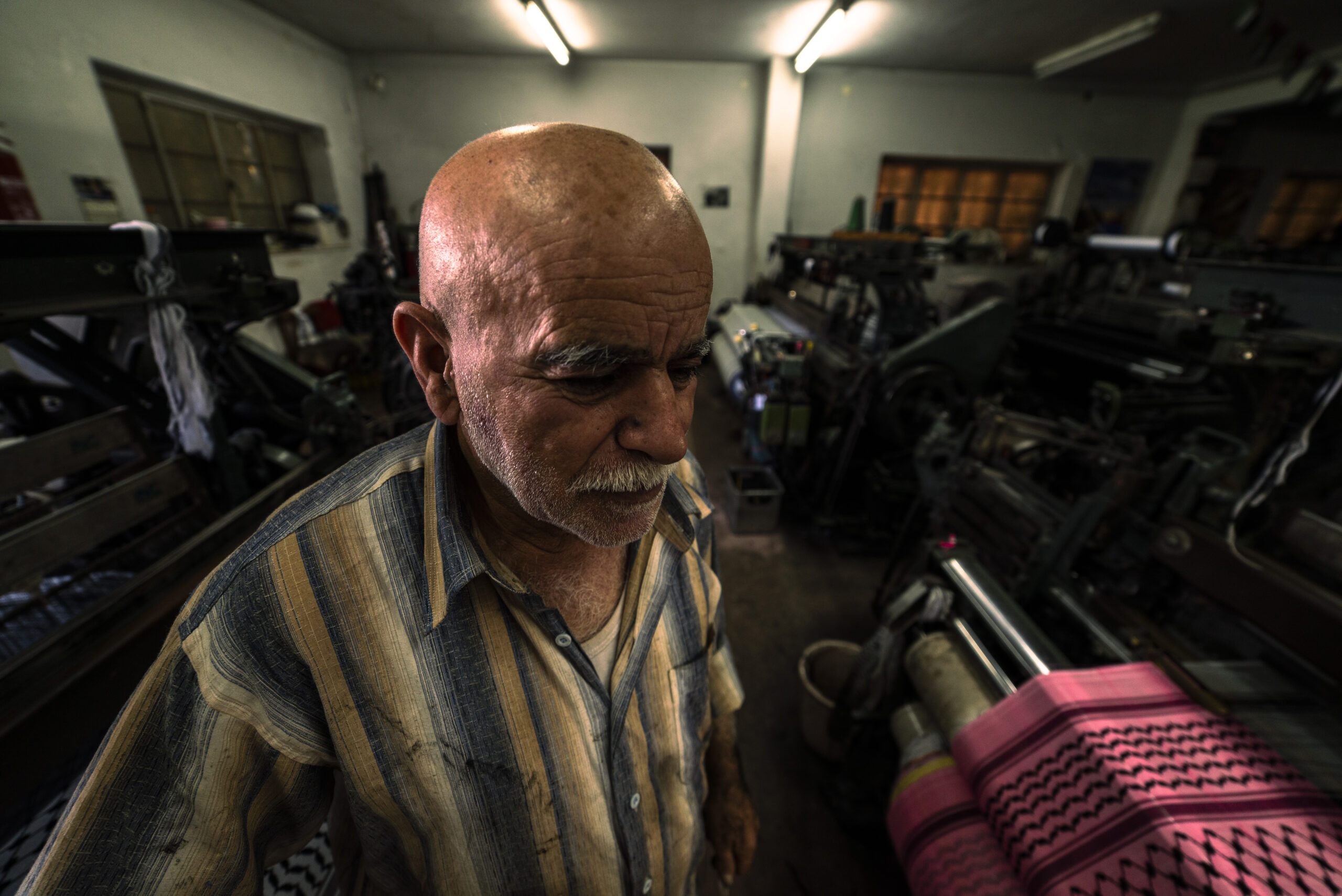
An elderly craftsman works at the loom.
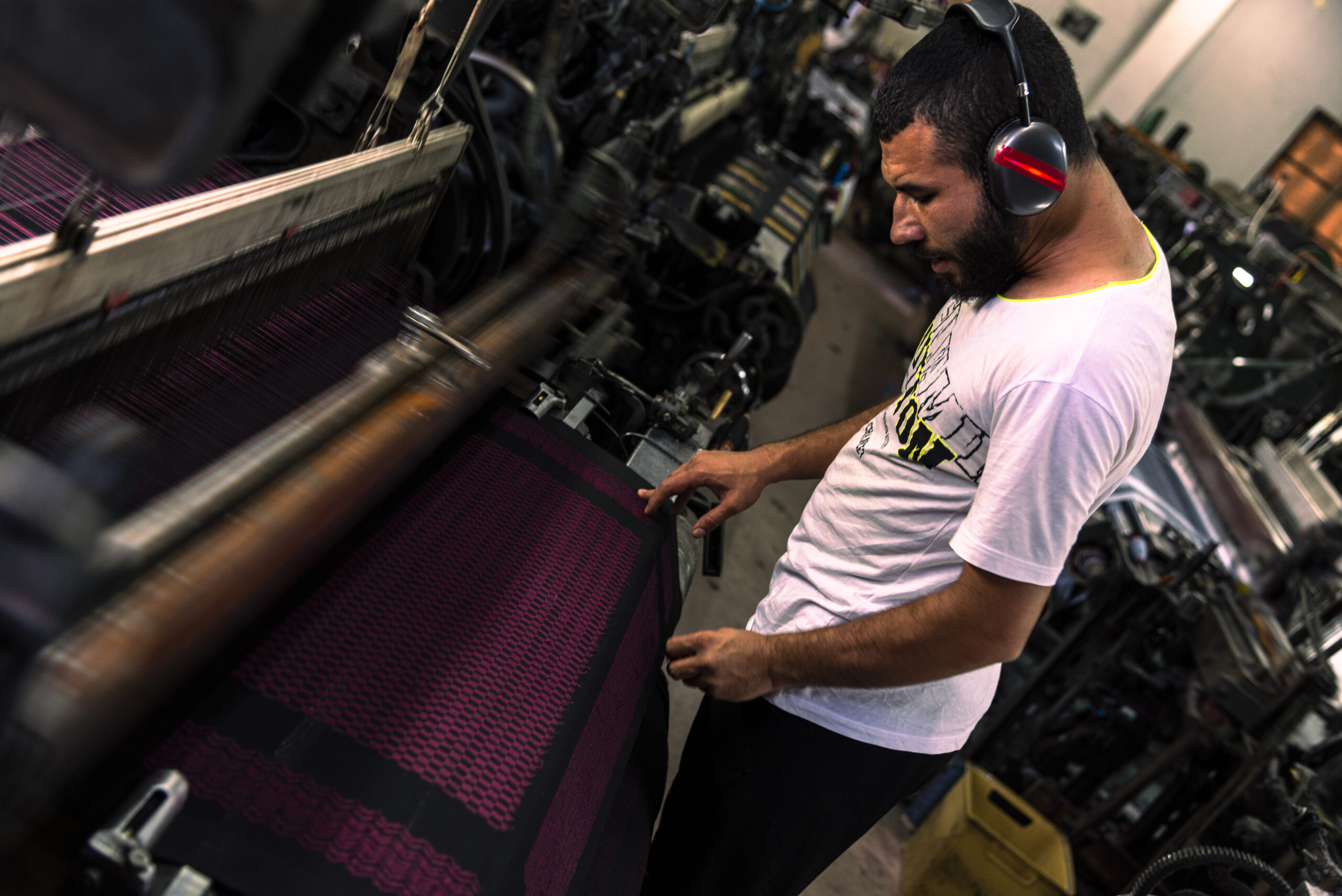
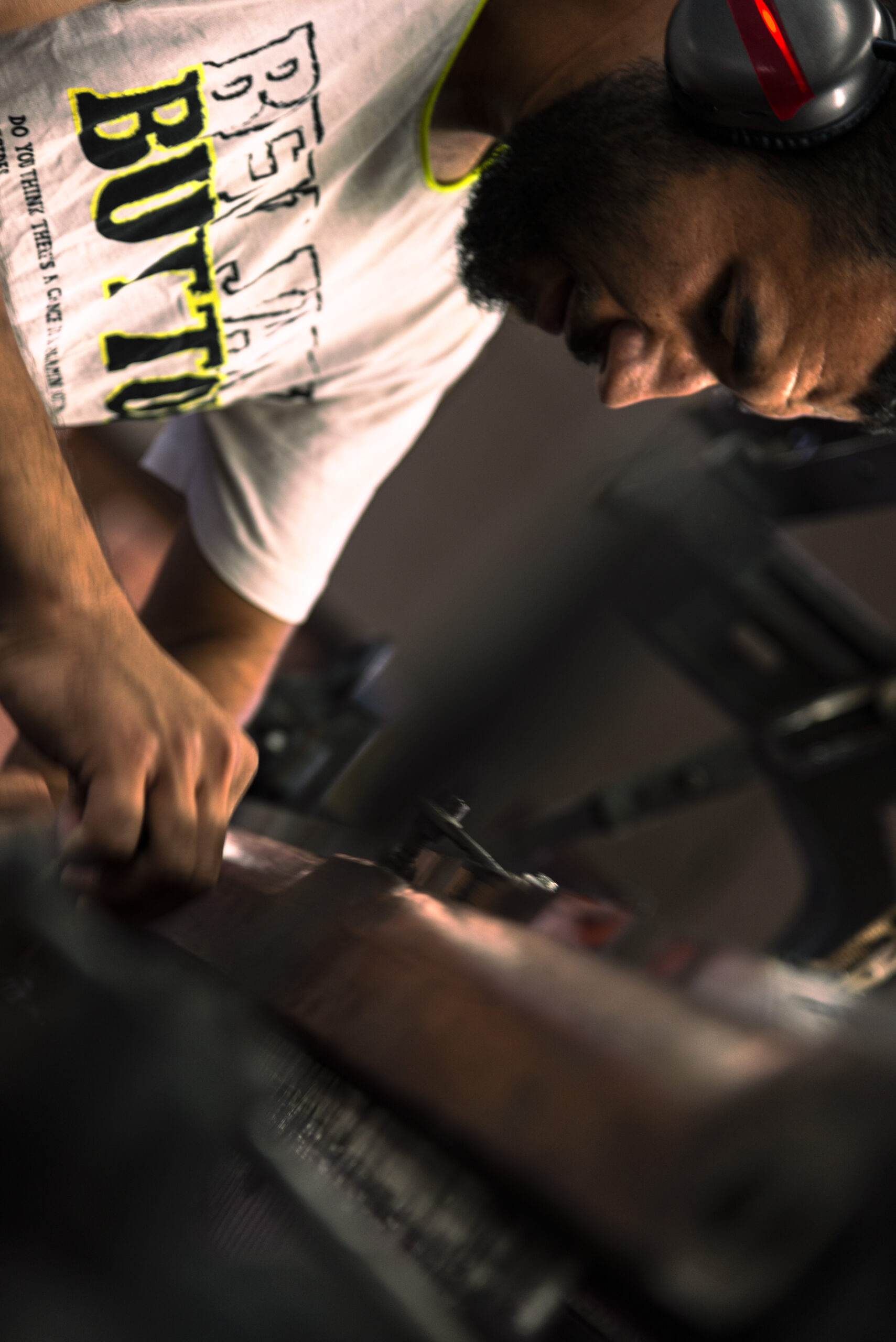
A young craftsman works on a purple Kufiyah.
The noise of the machines working nonstop is almost deafening.
A young craftsman is pictured a close-up working at the loom on a purple Kufiyah. He wears ear protectors to reduce the noise of the incessantly working machines.
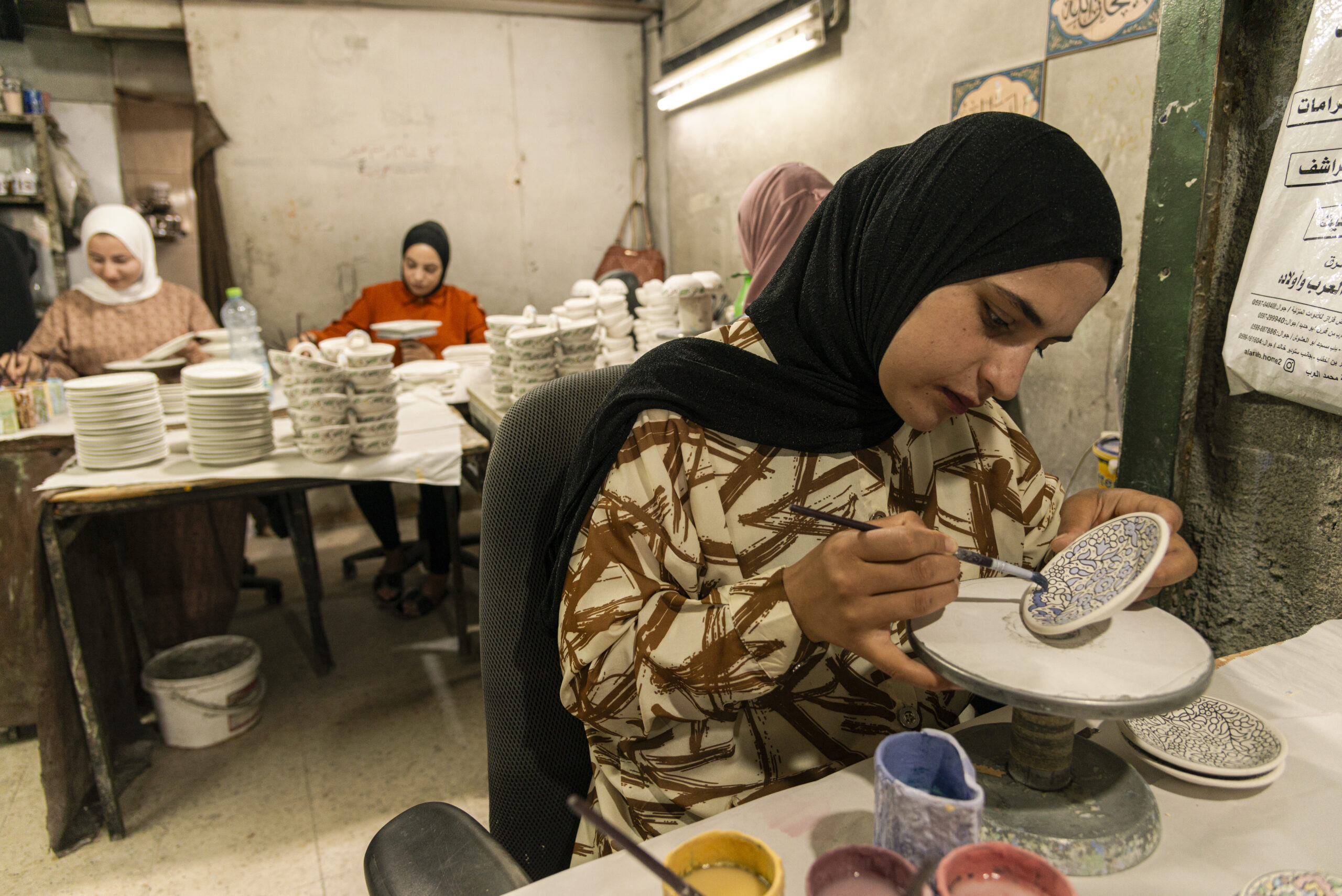
A workshop in one of the glass and pottery factories. Hebron is famous in Palestine for craftpeople working with these materials and creating typical handicraft pieces.
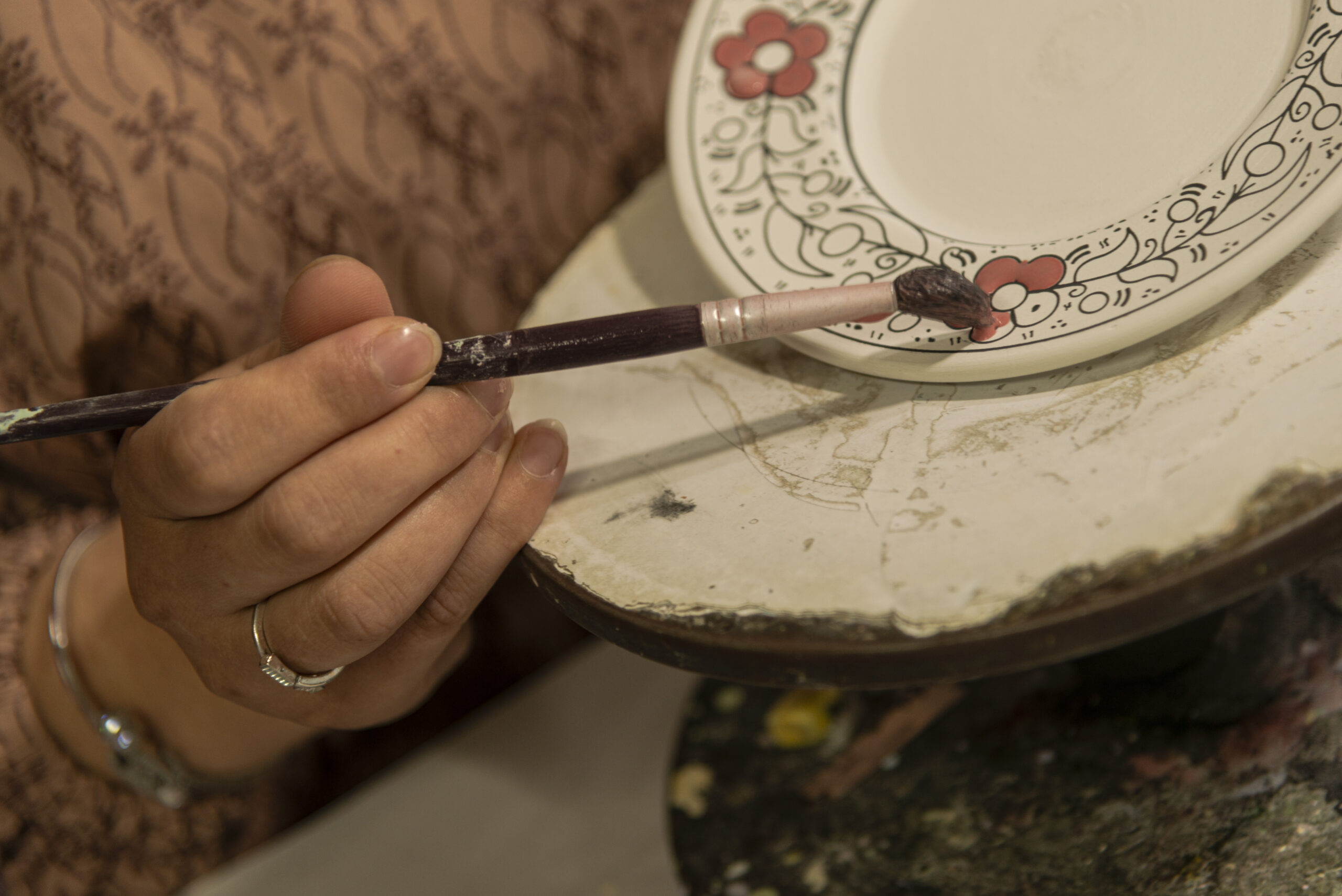
Detail of one of the pieces being worked on in the Hebron workshop.
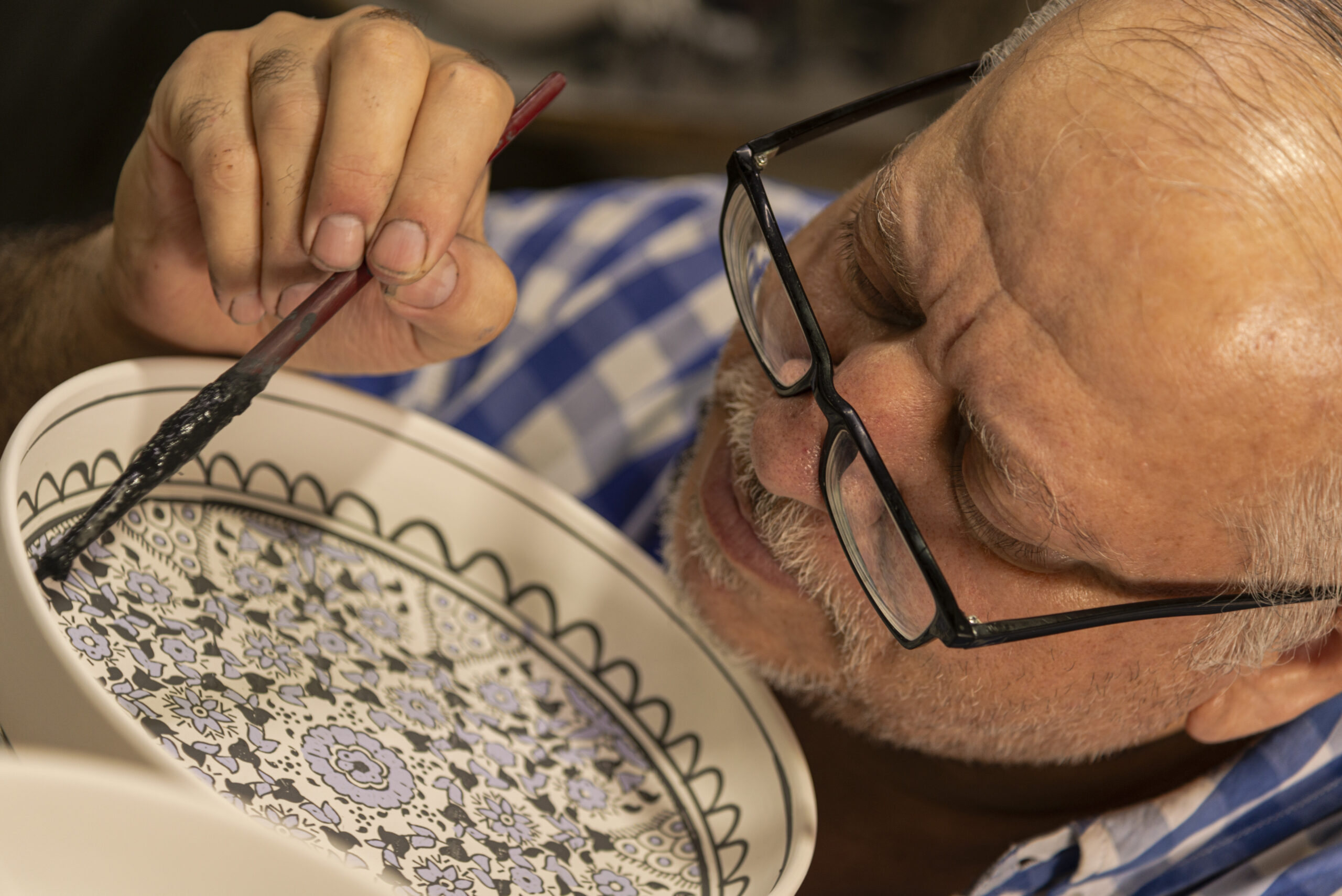
An artisan is intent on decorating a ceramic bowl in one of Herbon's many workshops
Some handcrafted glass pieces ready for sale.
Some of the handmade pottery ready for sale in the store adjacent to the workshop.
Glass ampoules waiting to be sold on the shelves of the laboratory store.