La resistenza e la resilienza passano attraverso il ricordo
In Palestine, the walls have been transformed, paradoxically, into means of resistance against the very walls of the occupation and apartheid that Palestinians are forced to circumvent daily.
They have become means of communication, of art, of expression, of homage to the people who have contributed to their emancipation and self-determination and resistance. Graffiti and messages can be spotted everywhere while walking through the cities and streets of the West Bank.
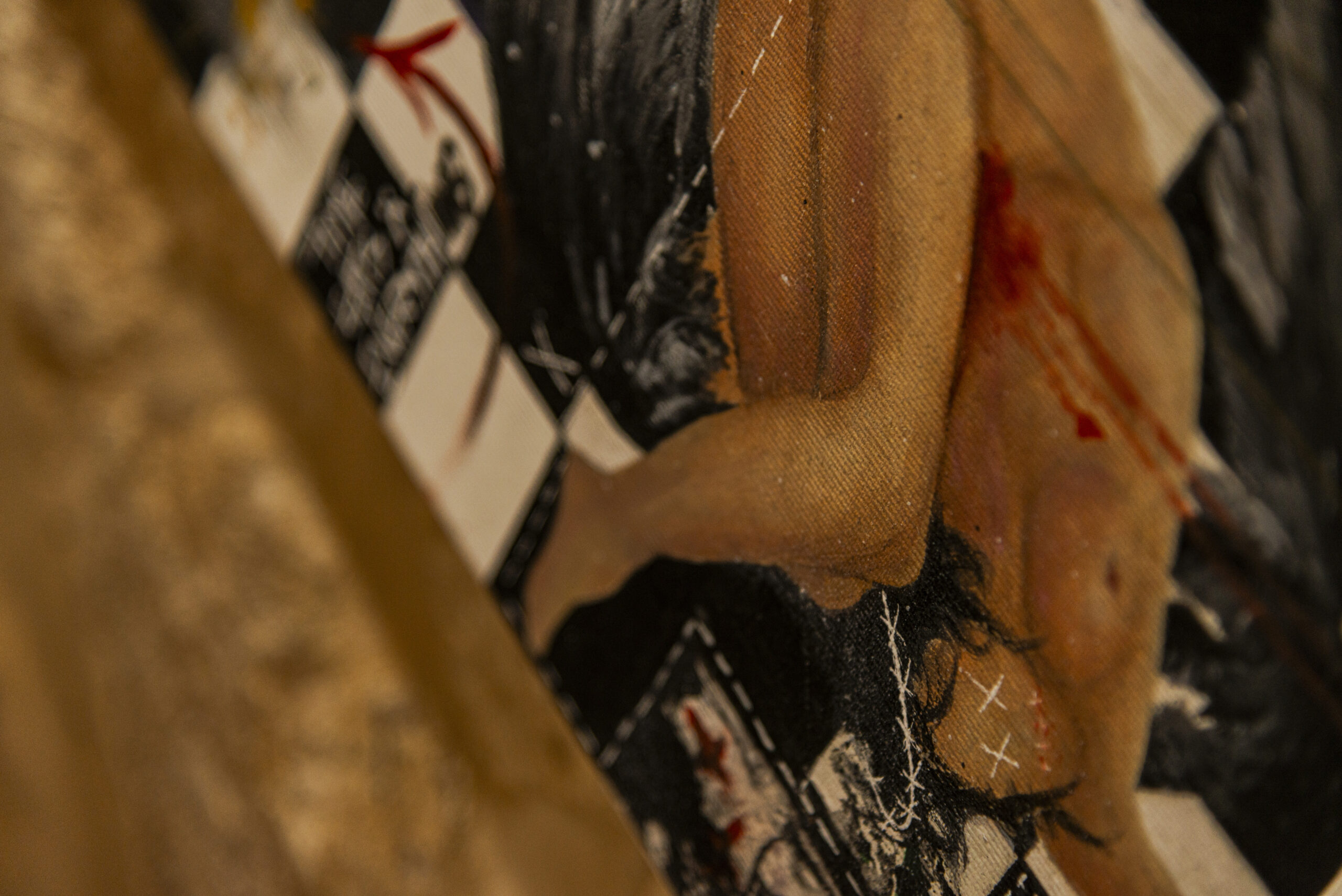
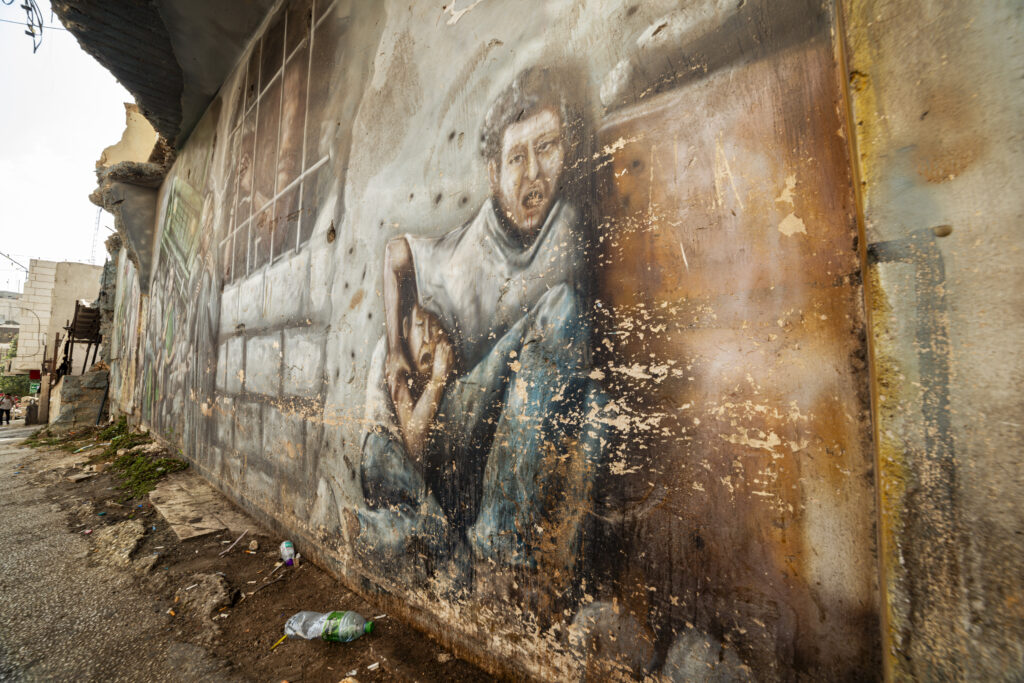
In the cover photo of the post: a detail of a graffiti in Ramallah depicts one of the most tragic episodes of the Second Intifada, when in September 2000, little Mohammed al-Durrah and his father Jamal were killed by the Israeli army as they were trying to take cover from bullets and Jamal was trying to shield his son with his own body.
The separation wall
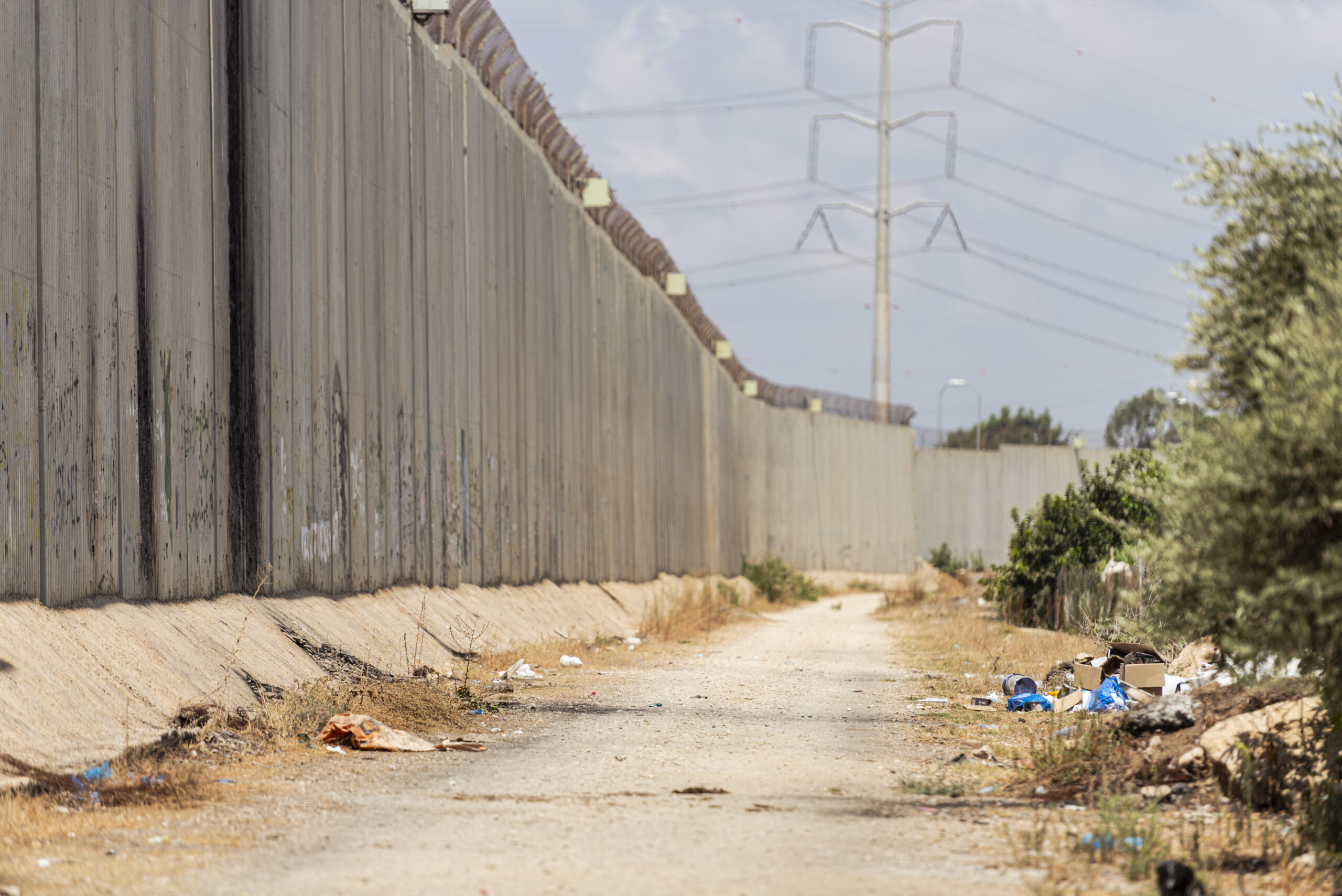
A section of of the separation wall in the city of Qalqilya, famous for having its perimeter largely occupied by the wall.
The separation wall was built by the Israeli authorities following the outbreak of the Second Intifada. It is a concrete wall, over 700 km long and between 8 and 10 meters high, seamless and studded with turrets from which the Israeli army can monitor and shoot.
The wall is largely built not on the border between the Palestinian territories and historic Palestine, as the Palestinians call Israel, but within the Palestinian territories, so as to take additional territory from the Palestinians. Many families have been separated because of the wall, and many houses have been destroyed along the line where the concrete slabs of the wall rise from the ground. Moreover, the wall is modular so that it can be moved, if necessary Israeli authorities consider it necessary to annex more territory from West Bank.
The separation wall has become one of the most evident symbols of the segregation and apartheid to which Palestinians are subjected: in order to move from a city to another, Palestinians must take long detours, that cause them to travel several hours to reach places that, before the wall was built, could be reached in a few minutes.
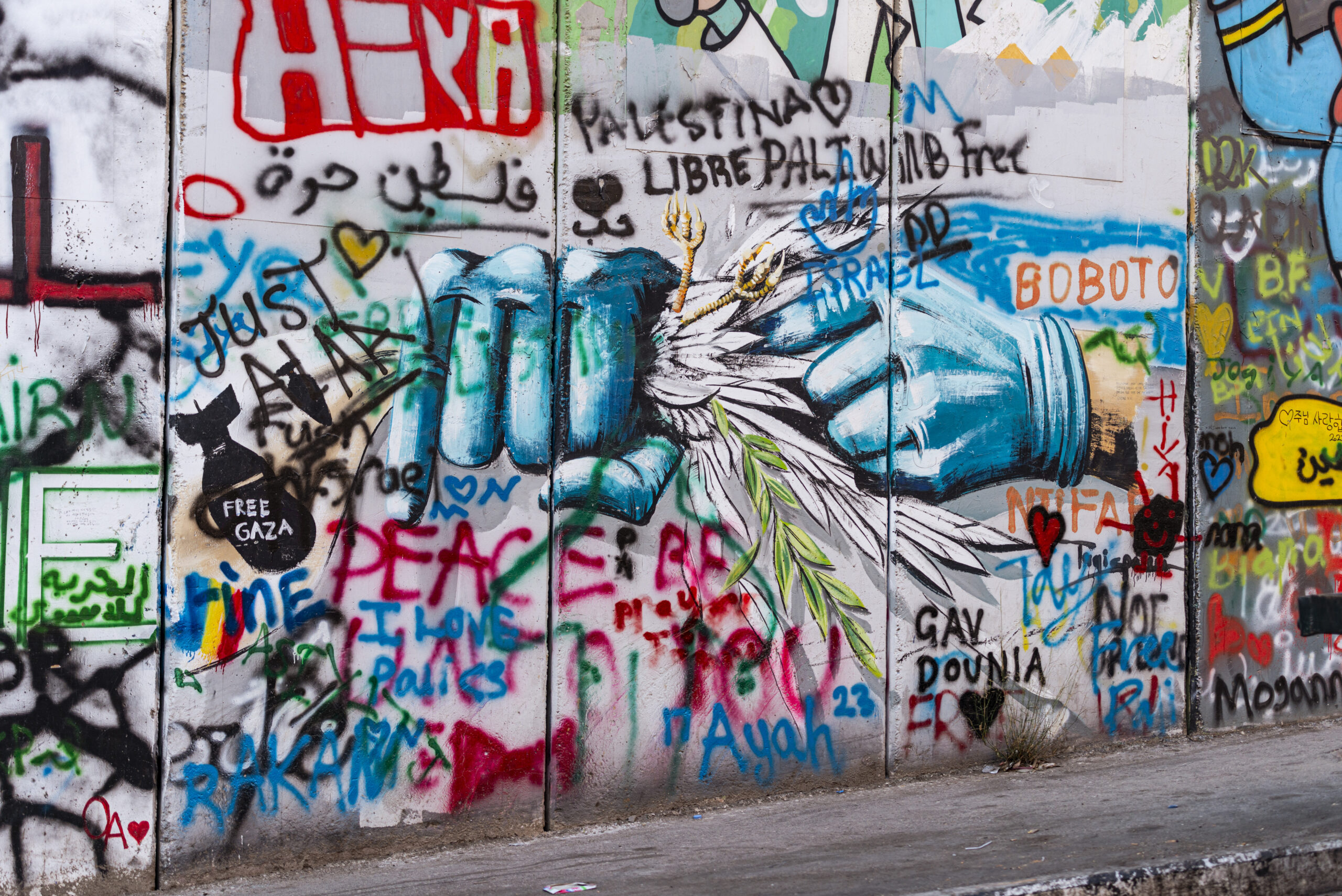
In Bethlehem, the wall is covered for very long stretches with lots of graffiti, including by famous artists such as Banksi. Not all Palestinians appreciate graffiti done by foreigners, but nevertheless messages, portraits and illustrations cover virtually every corner of it.
Graffiti on the separation wall in Bethlehem. Peace is killed every day in the West Bank.
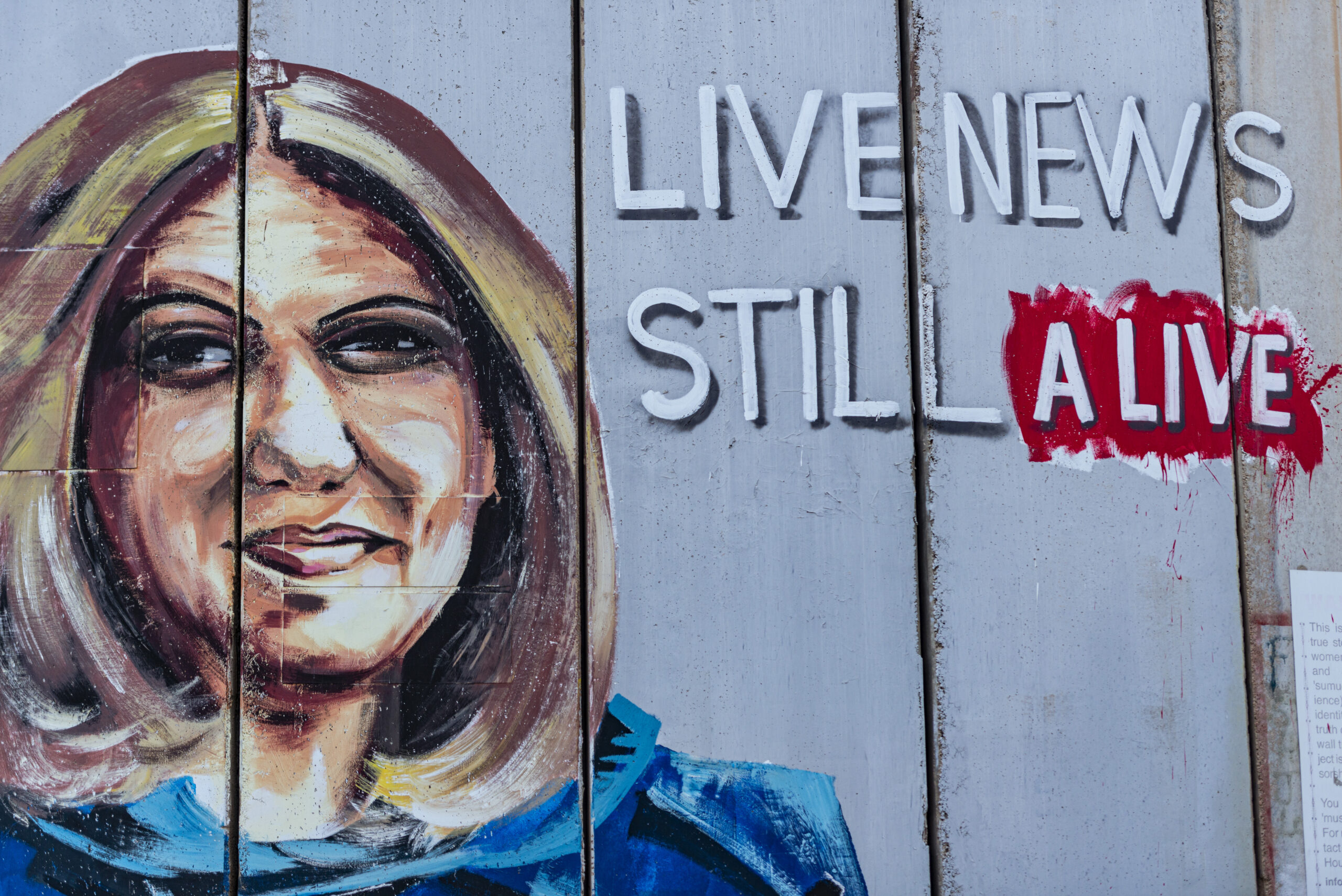
Graffiti on the separation wall in Bethlehem shows Shireen Abu Akleh, who was killed by an Israeli sniper in May 2022. For months, Israel denied responsibility for Shireen Abu Akleh's murder.
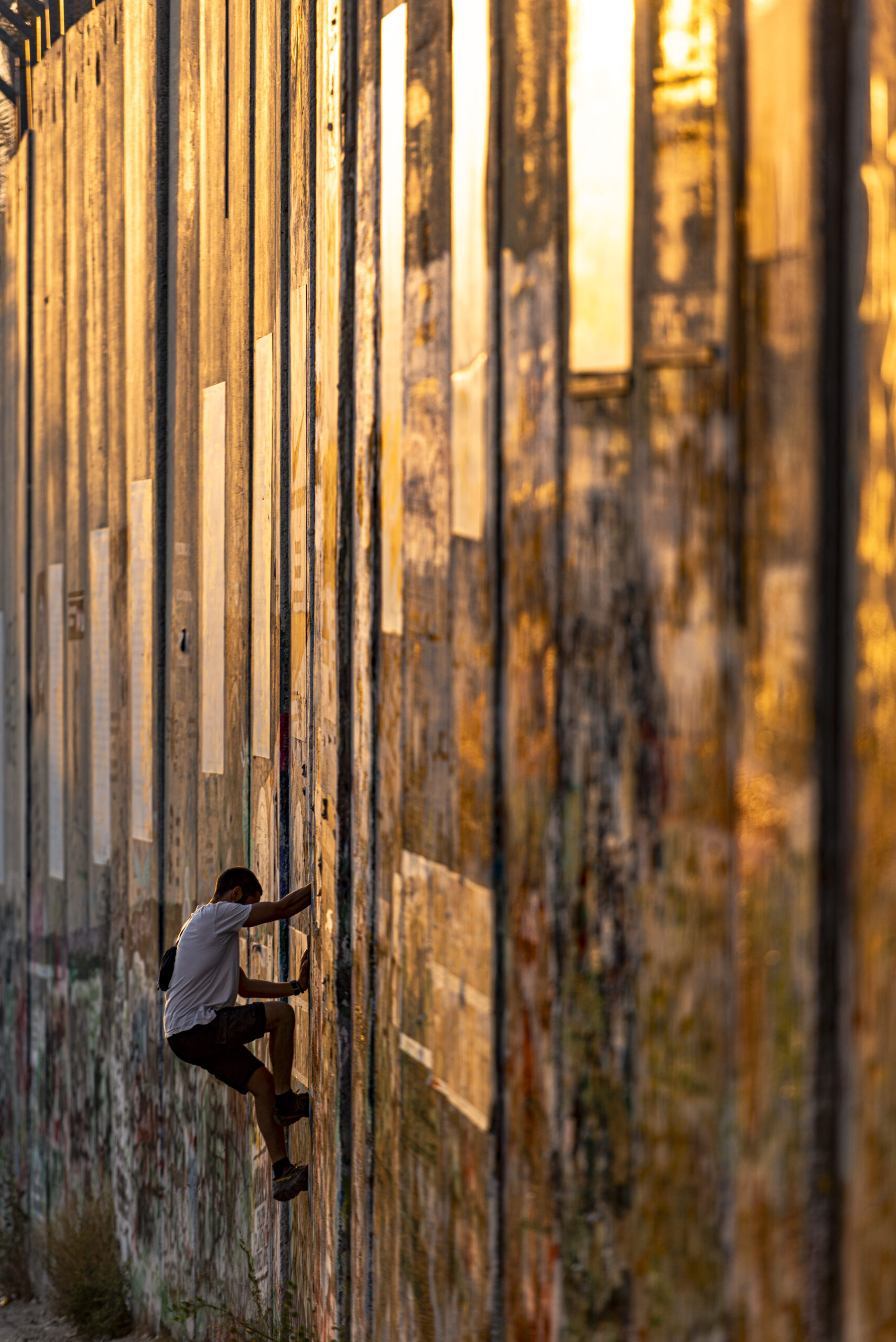
A boy climbs the separation wall in Bethlehem, along one of the grooves that lie between one concrete slab and another.
Handala
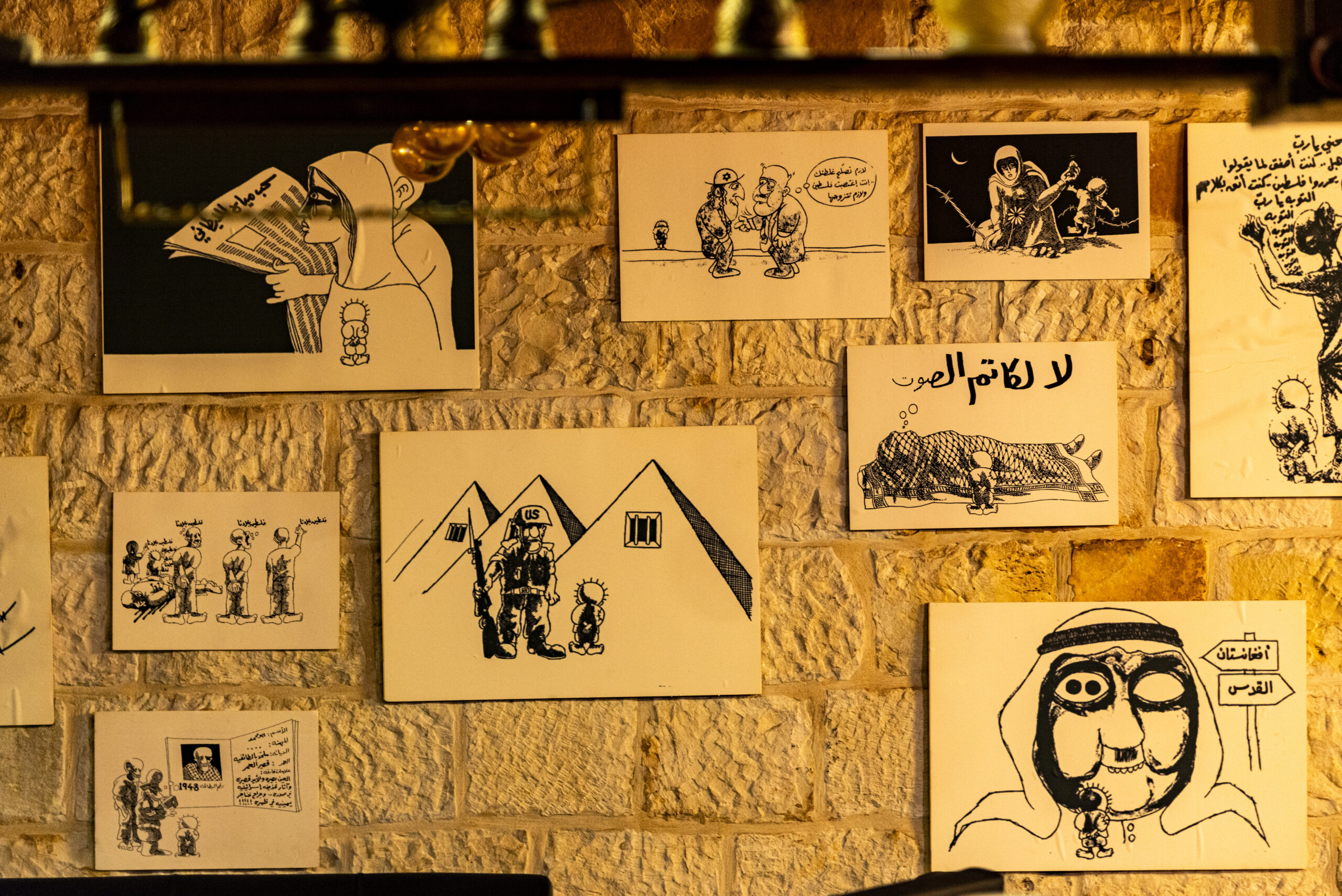
Handala is one of the symbols of the suffering of the Palestinian people. A 10-year-old boy from a refugee camp, who turns his back to the world while observing the actions represented in the illustrations in which he appears. He is dressed in rags and barefoot, sometimes wearing a keffiyeh, or holding the key to a Palestinian house, symbol of the expulsion of the Palestinians from their homes during the Nakba, the catastrophe that began in 1948, sometimes with a raised fist, or a weapon. more often with his hands behind his back, as a sign of resignation.
Handala is a character by the illustrator Naji al-Ali, who was 10 years old when he was expelled from his village, like Handala. Naji al-Ali was assassinated in London in 1987, probably by agents of the Mossad, the Israeli secret service for operations abroad.
Naji al-Ali has been telling in a sharp and crude way for many years, through Handala, who represents the innocence of Palestinian children and has the ability to lay bare the violence and hypocrisy of the powerful, the history, current events, occupation and ethnic cleansing of Palestine, criticizing both the West and the Arab world and its rich elites.
Handala has become part of Palestinian culture and symbolism to the point that graffiti representing him are everywhere.
One evening, walking through the streets of Ramallah, I found the Handala café. On the walls of the cafeteria were hanging dozens of illustrations by Naji al-Ali.
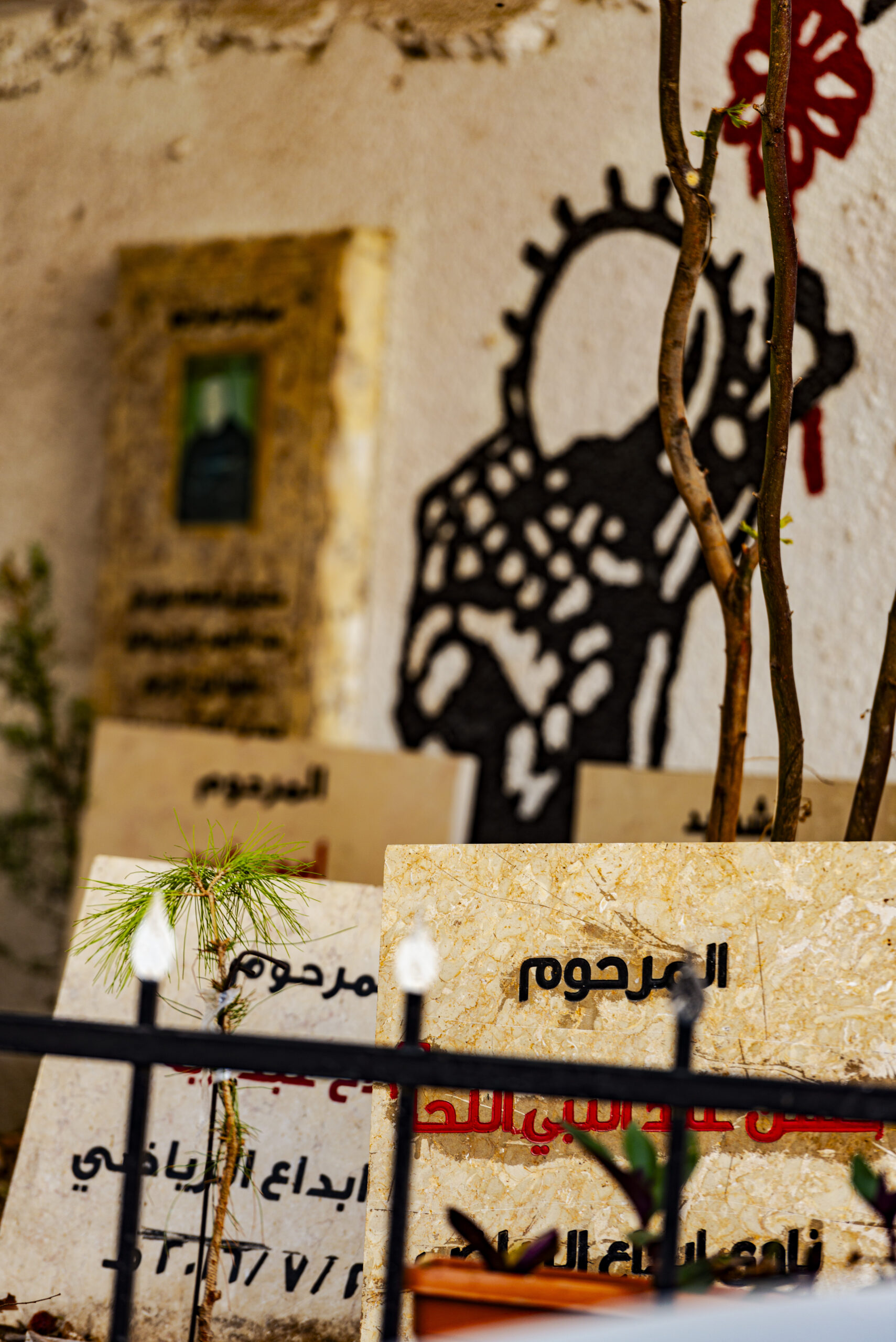
Stones at the entrance to the Deisheh refugee camp in Bethlehem commemorate Palestinian martyrs killed by the Israeli army. Many of them died in Israeli prisons and their bodies were not returned to their families until they had completed their sentences. An act of collective punishment that deprives the families and the martyr of the dignity of a burial. In the background, an image of Handala.
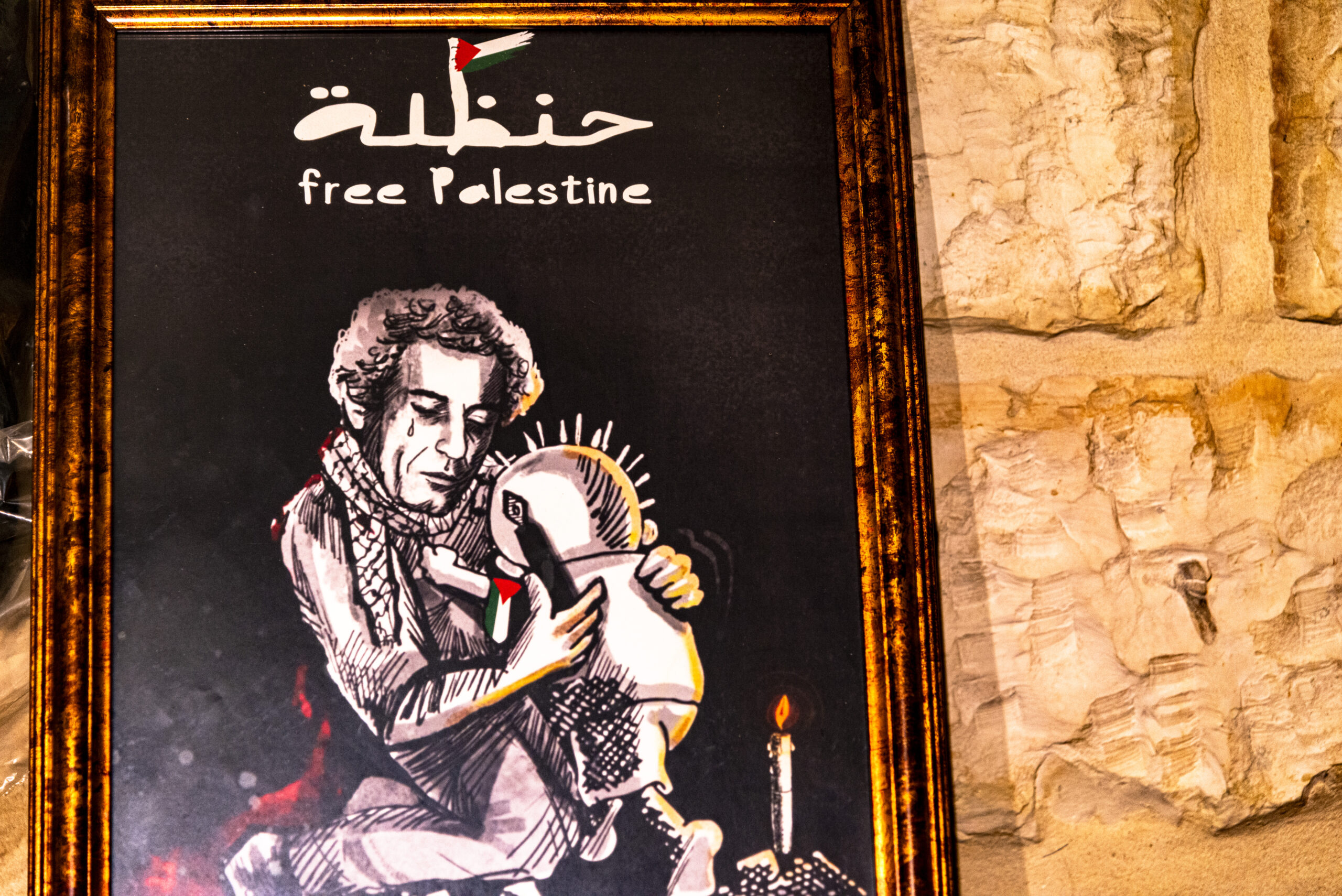
An illustration inside the Handala Café depicts Naji al-Ali embracing his character.
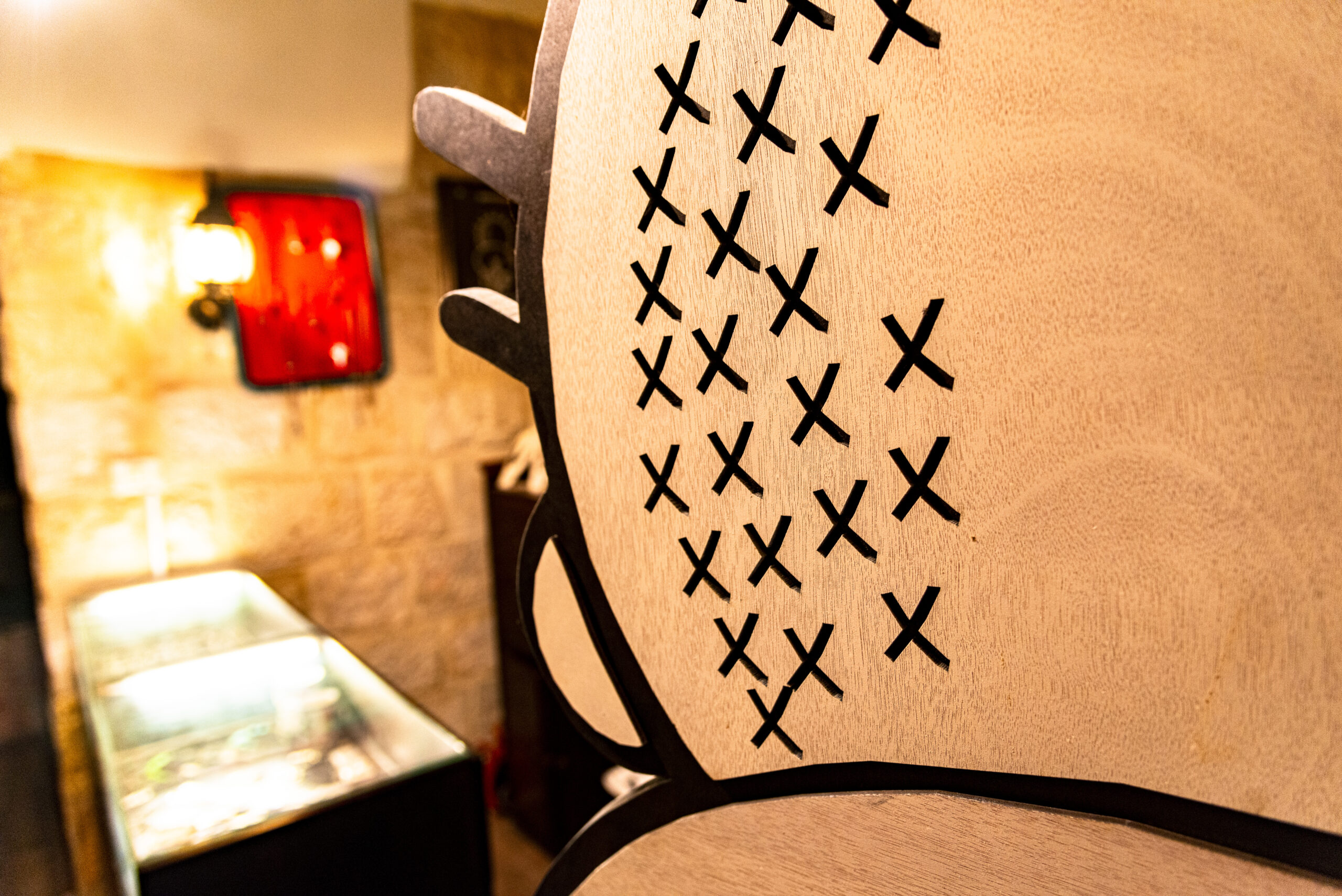
From the first moment you enter the place you are greeted by the silhouette of Handala, who acts as a guide in the history of the occupation and ethnic cleansing of Plaestine.
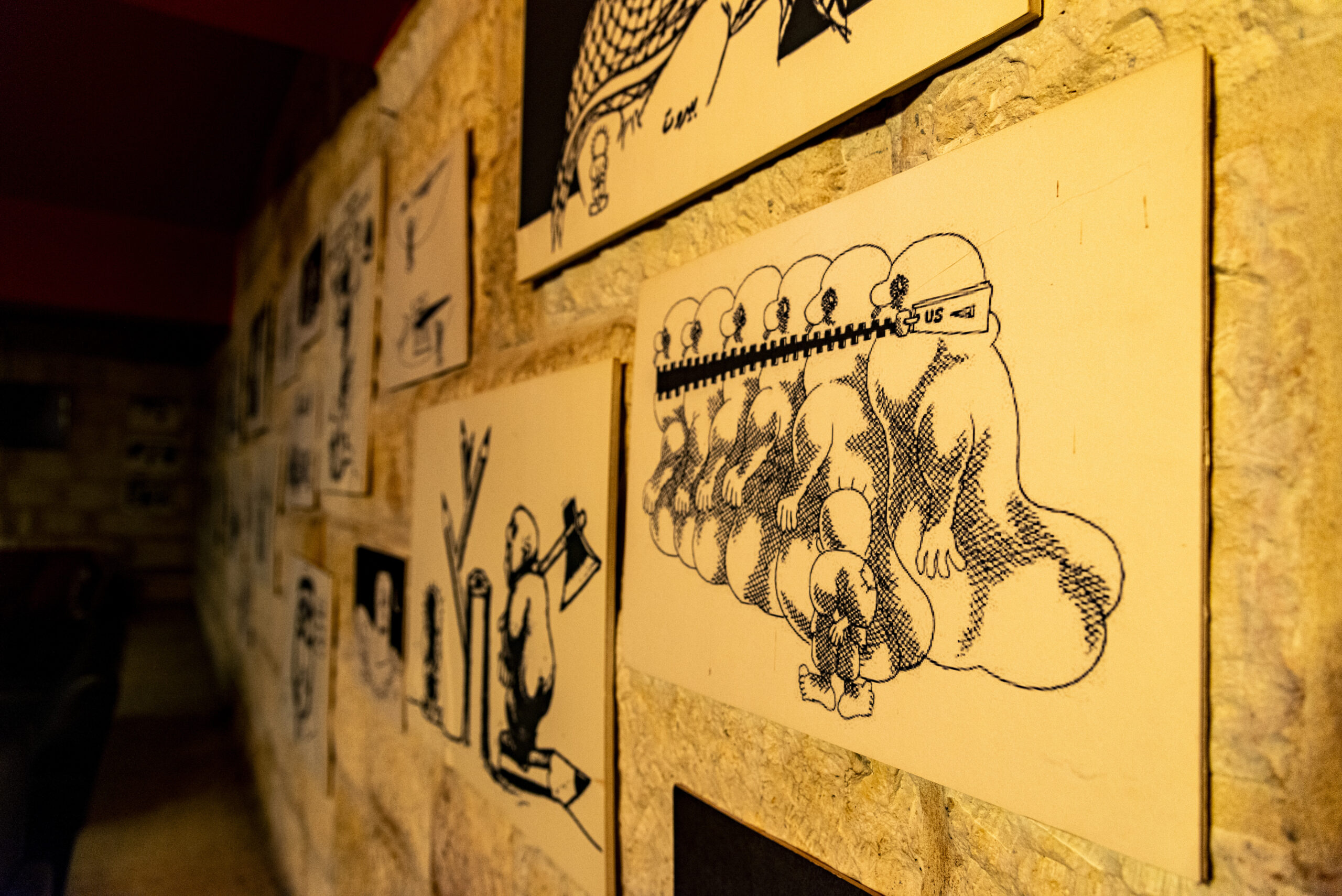
The walls of the Handala Café covered with Naji al-Ali's illustrations.
By following Naji al-Ali's illustrations, one can trace the entire history of Palestinian ethnic cleansing and occupation.
Cultural Intifada
The Freedom Theatre is located inside the Jenin refugee camp. Its history is that of a reality that carries out a non-violent resistance made of culture, theater and fundamental support to children continuously subjected to numerous traumas due to the violent Israeli occupation.
The story begins in the 90s, when a Jewish woman, Arna Mer-Khamis, married to a Palestinian man, began working with the children of the refugee camp, using theater to help them and process their own suffering, anger and traumas.
The Freedom Theatre was then founded by her son, Juliano Mer-Khamis, after her death. Juliano was killed in 2011, probably by an Israeli soldier disguised as a Palestinian fighter.
On July 3, 2023, the Jenin refugee camp was violently attacked by the Israeli army, resulting in the deaths of at least 12 Palestinians and extensive damage to buildings, including the removal of asphalt from the roads by bulldozers. During the attack, the Freedom Theatre building was used as a base by the Israeli army. During the attack, some graffiti outside the Freedom Theatre building were also burned and damaged.
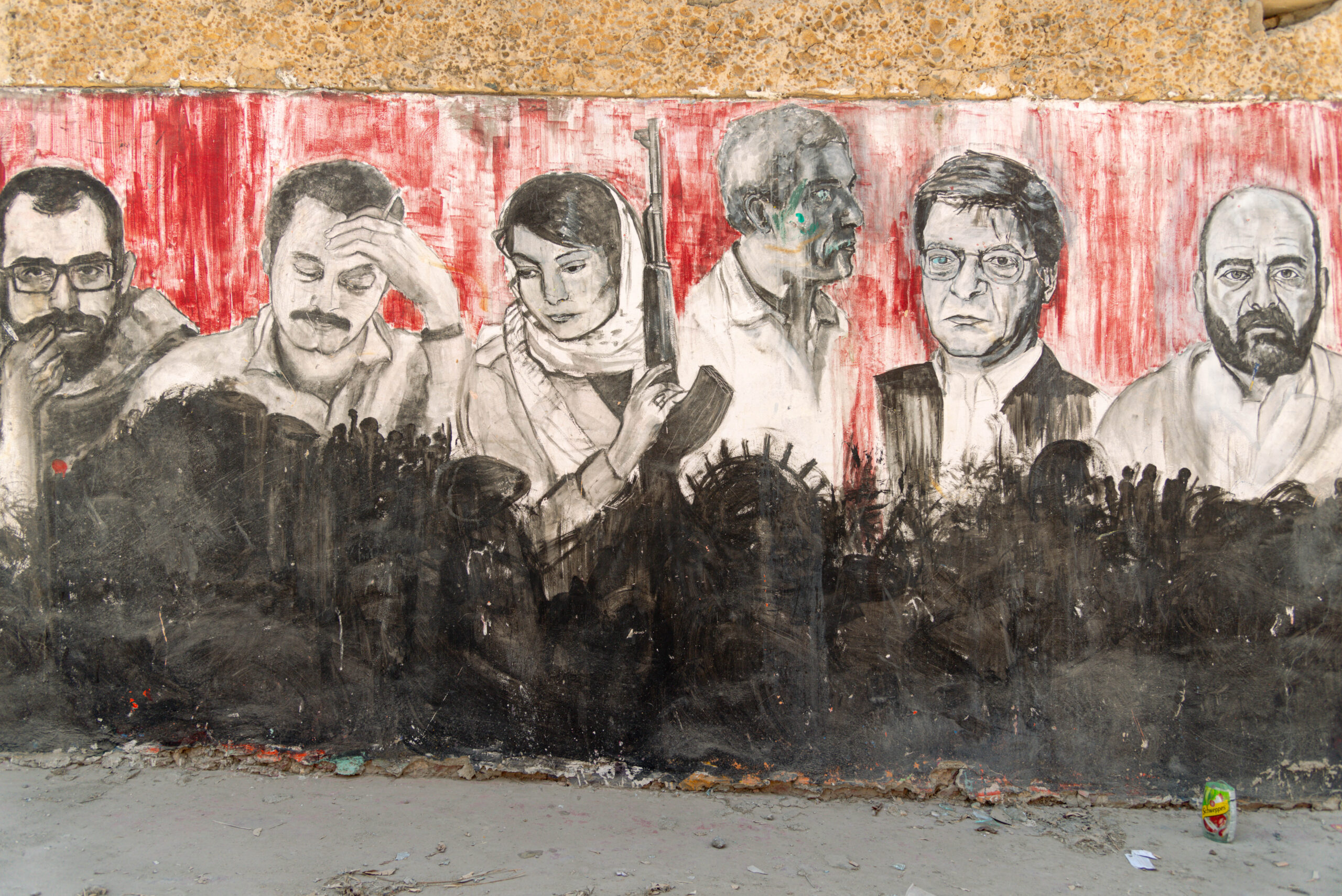
Palestinian murals often depict iconic figures from Palestinian history, writers, poets, activists and fighters, such as the writer Ghassam Kanafani and the freedom fighter and activist Leila Khaled, here depicted as protectors of the Palestinian people and their cause.
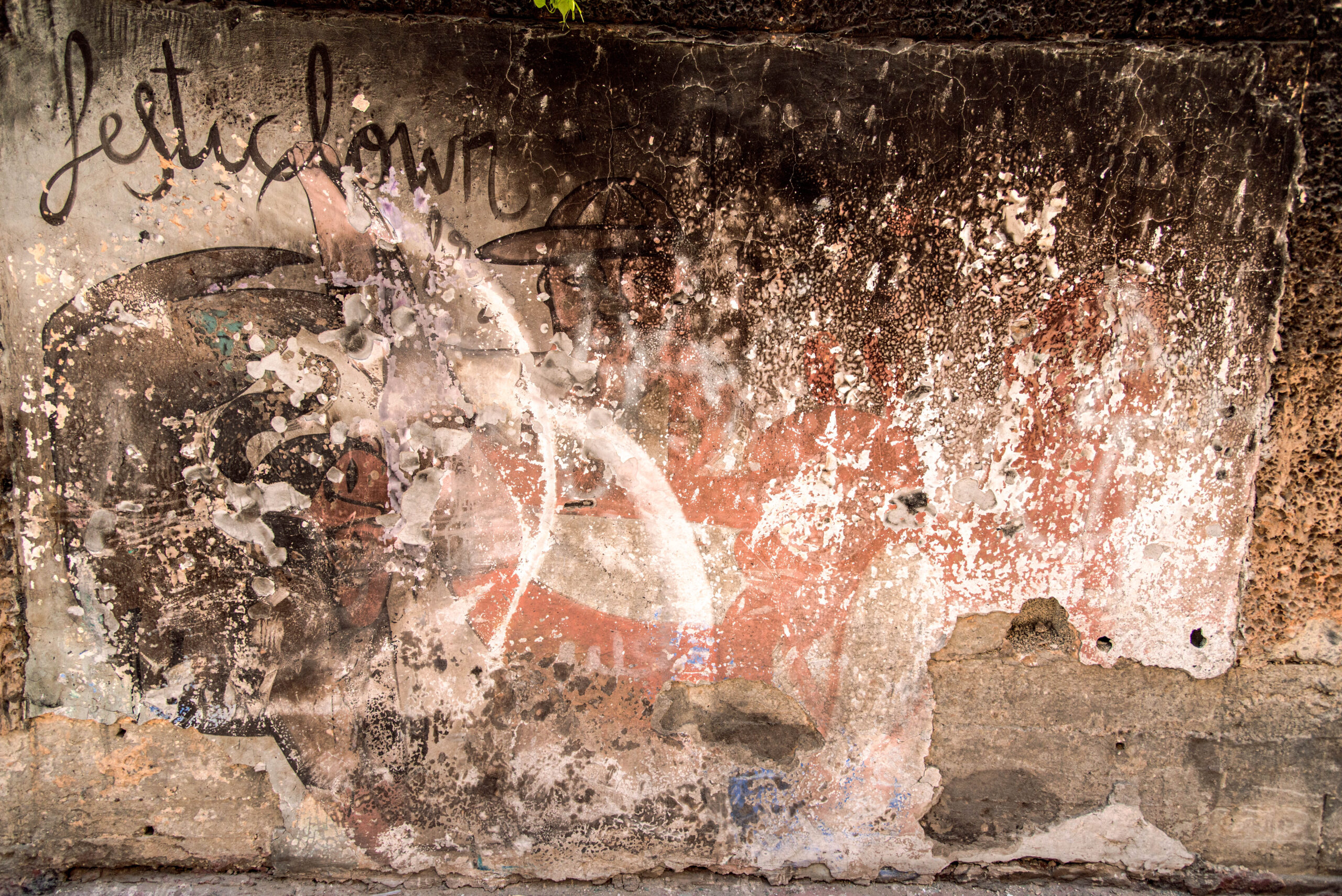
A mural inside the Jenin refugee camp, outside the Freedom Theater, depicted a clowning event. The Israeli army, which entered the Jenin refugee camp in early July 2023, first occupied the Freedom Theater building. The mural, as well as several other parts of the building, was damaged and is almost unrecognizable.
In memory of the martyrs
One of the things that immediately catches the eye when entering Palestinian cities, refugee camps and old cities is the sadly huge quantity of portraits, graffiti, photographs and posters representing martyrs. Women, men, girls and boys, students and often even children killed by the Israeli army. Sometimes there are stencils repeated several times on all the walls of a city, in other cases large portraits are exposed in the streets, made to remain there for a long time.
Often the walls in refugee camps were also used as means of communication, to update the community on key happenings related to the Israeli occupation. In the Dheisheh camp the Israeli army used to tear down the walls on which the news were reported, until one day the inhabitants of the refugee camp self-organized and wrote on all the walls where it wuld have been possible at the same time.
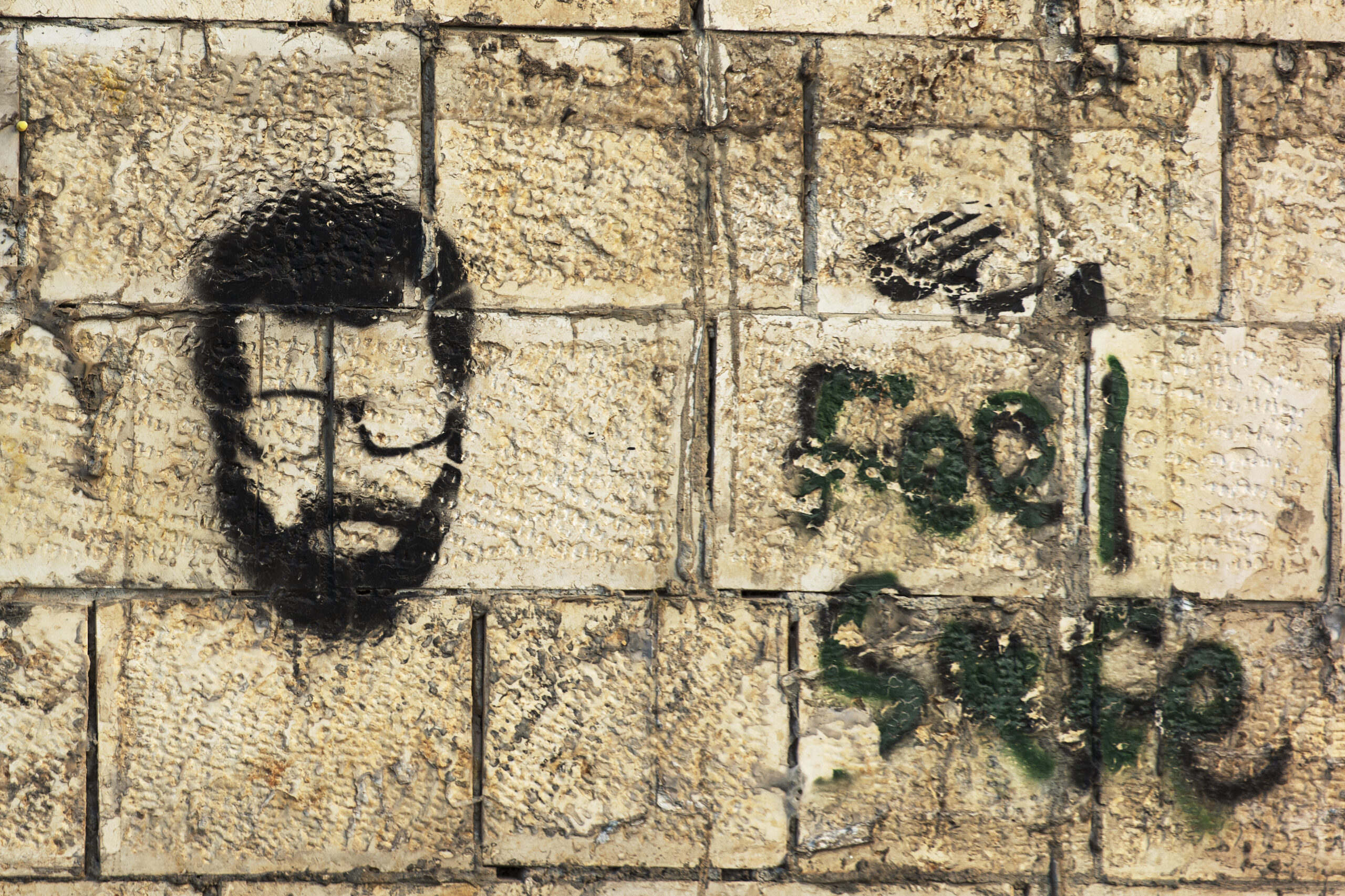
A stencil painted on a wall of Ramallah depicts the stylised face of a Palestinian martyr.
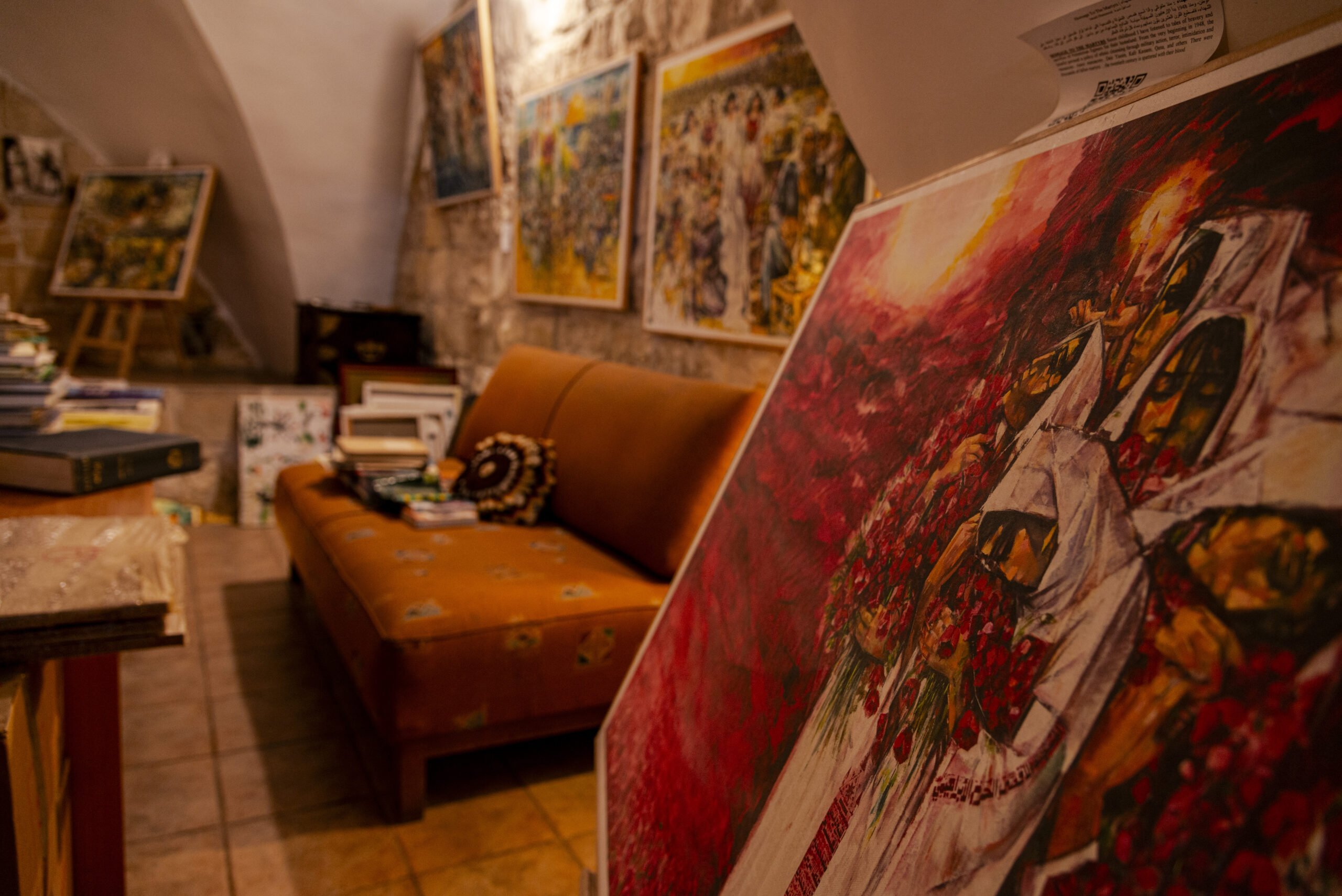
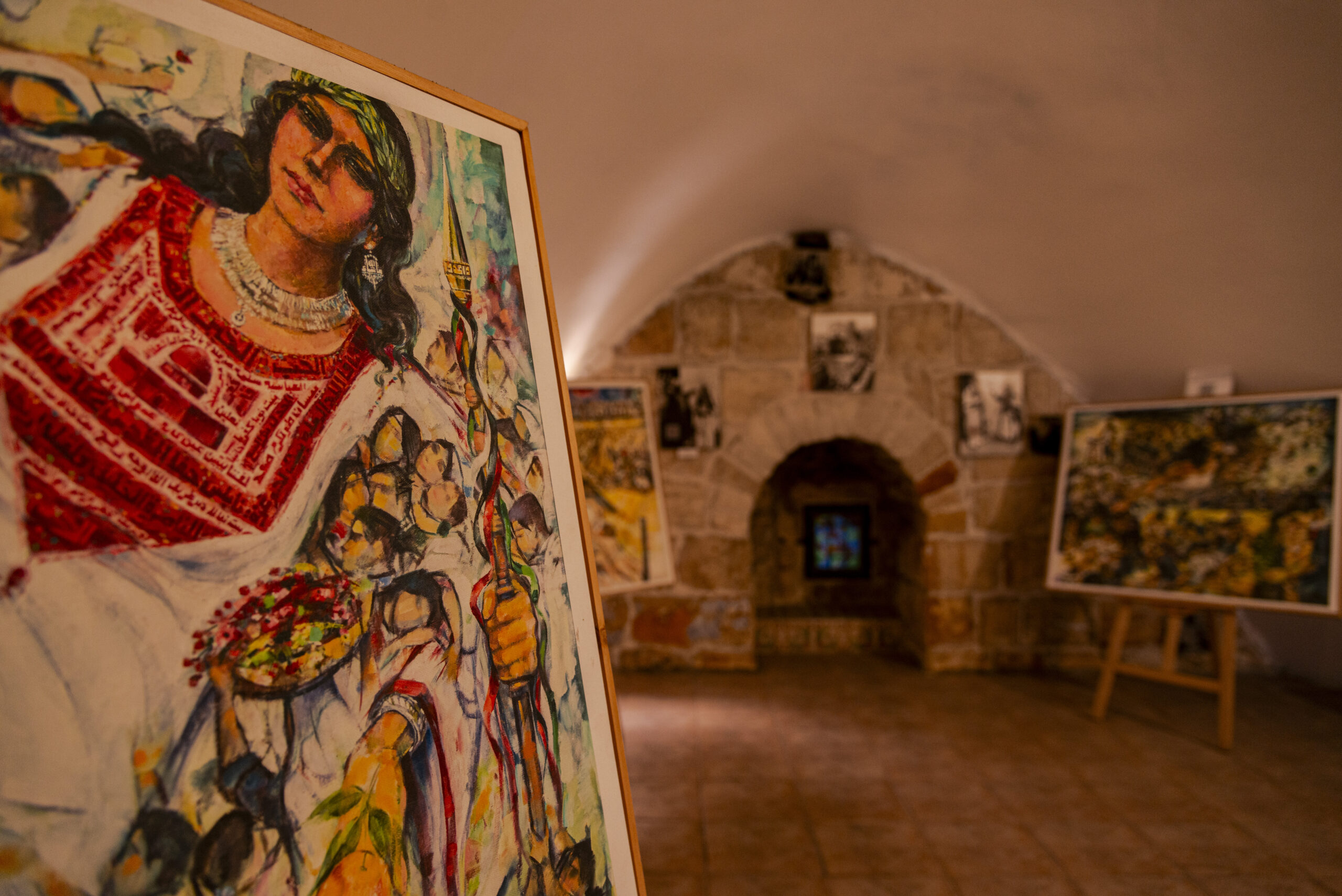
For 250 years it was the home of the Dar Zahran Jaghab family, the house of the Mukhtar of Ramallah and a reception center for travelers.
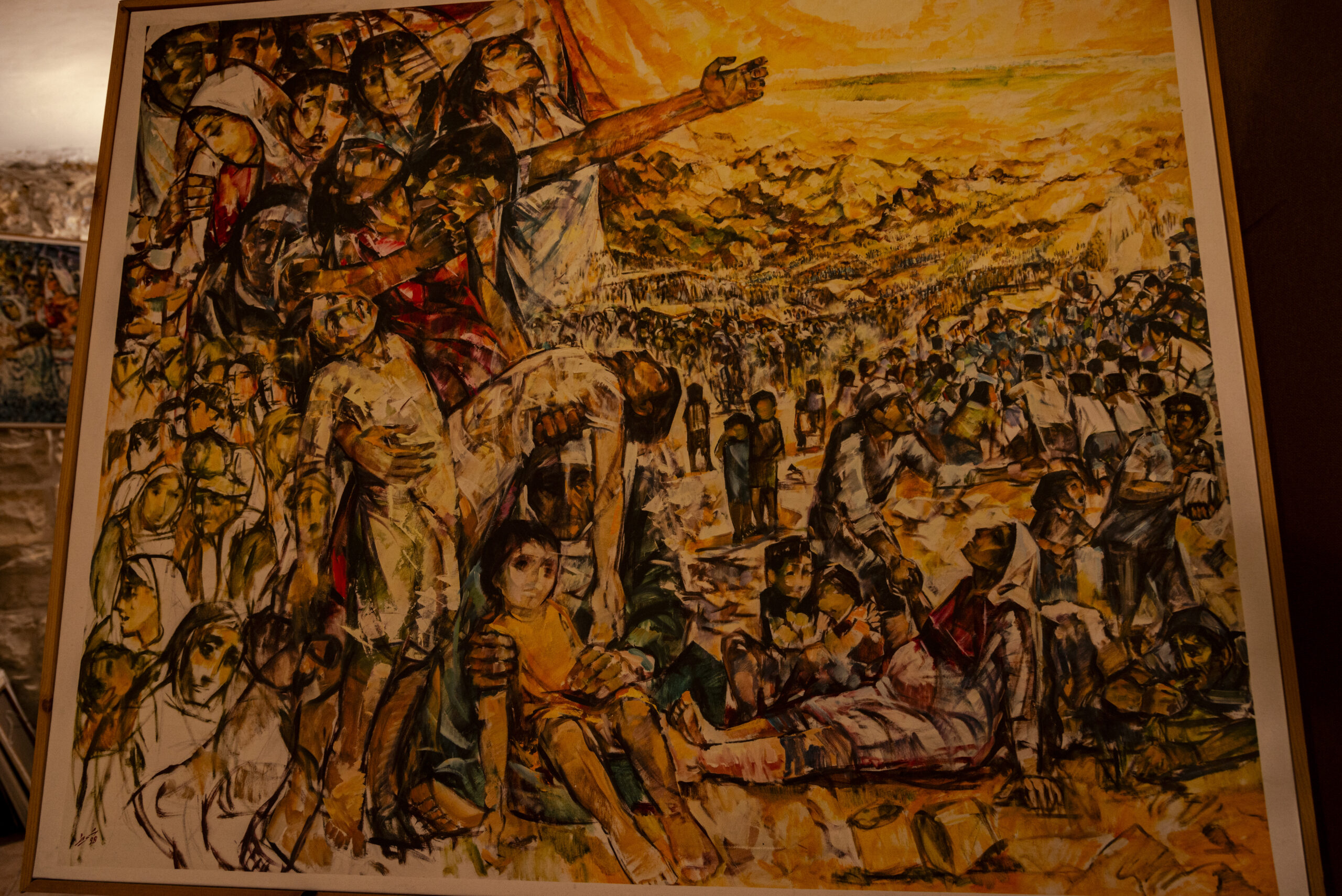
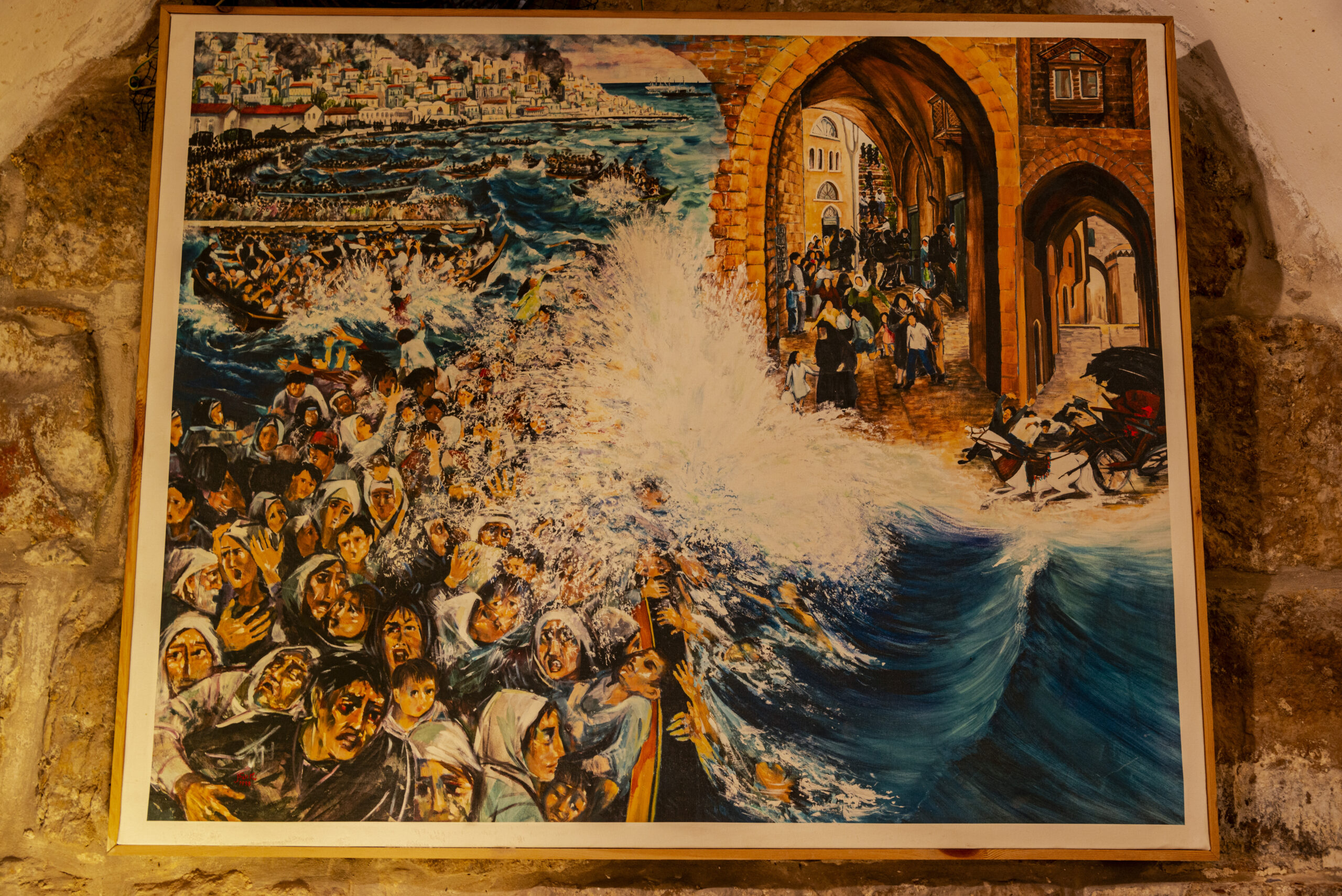
In Dar Zahran there are dozens of historical works and photos of Palestine. Among these, at the time of my visit, of particular interest was a series of paintings that represented the events of the Palestinian people during the ethnic cleansing of 1948.
Some paintings represent the suffering of civilians forced to flee into the desert, where many lost their lives, or by sea, boarding ships departing from When the ports of Palestine, in Jaffa, in Haifa, without knowing where the boats were headed and thus becoming refugees in neighboring countries.
Rebuilding through art
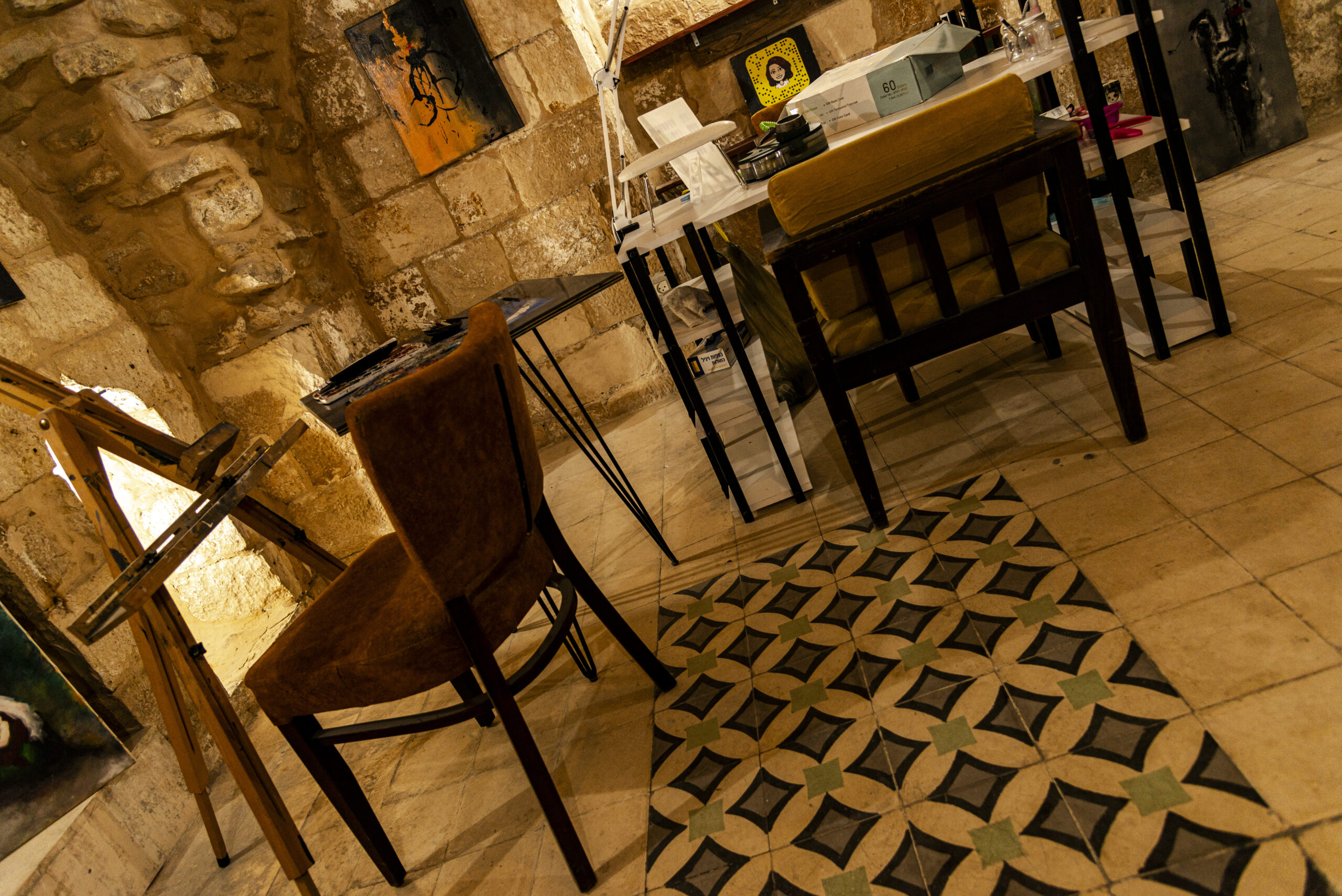
In the old city of Nablus there is a small corner of culinary art and more. It is The Yalla Project, started to renovate some of the buildings in the old city destroyed by the Israeli occupation. The project is carried out by two brothers and the wife of one of them, two architects and an urban historian.
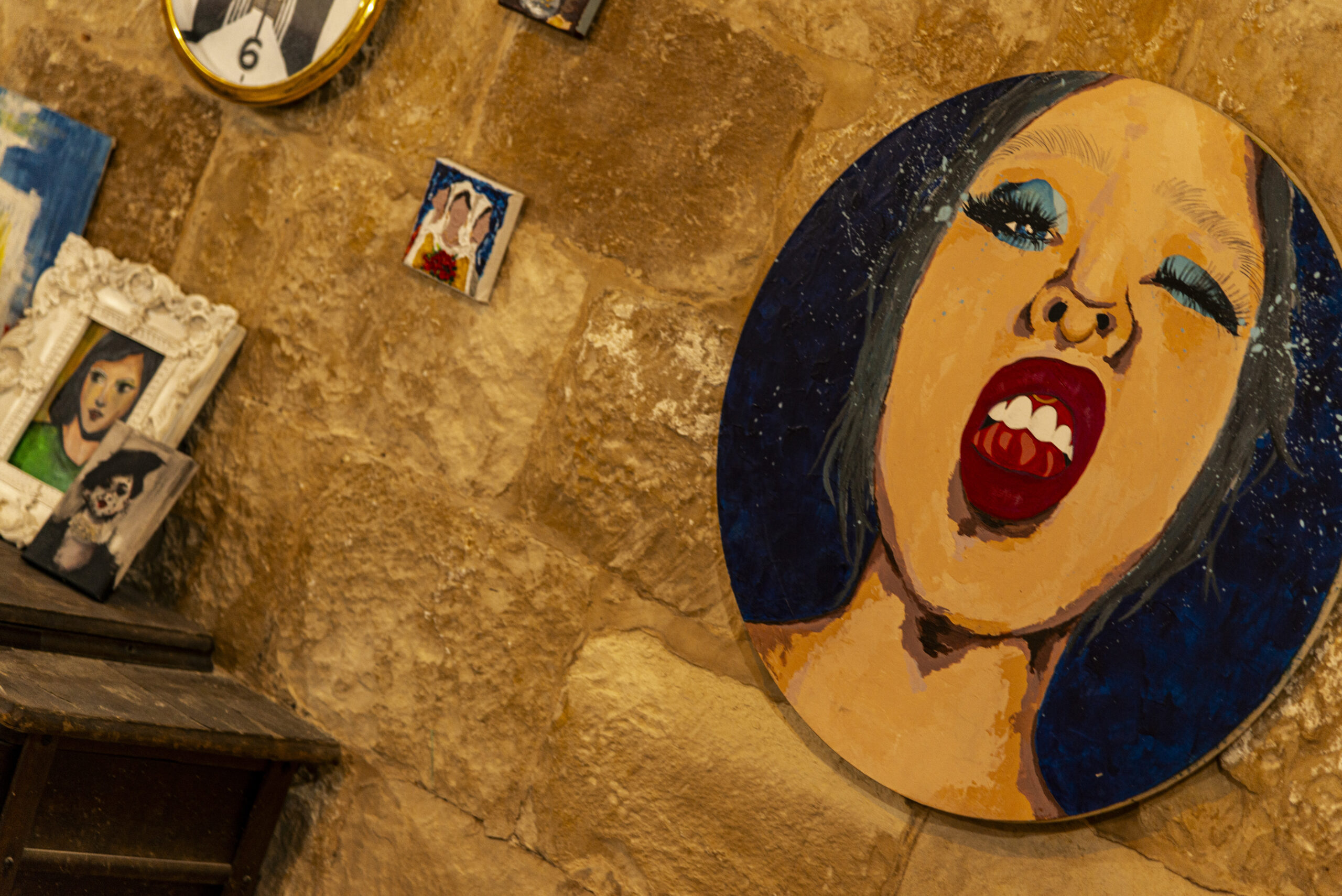
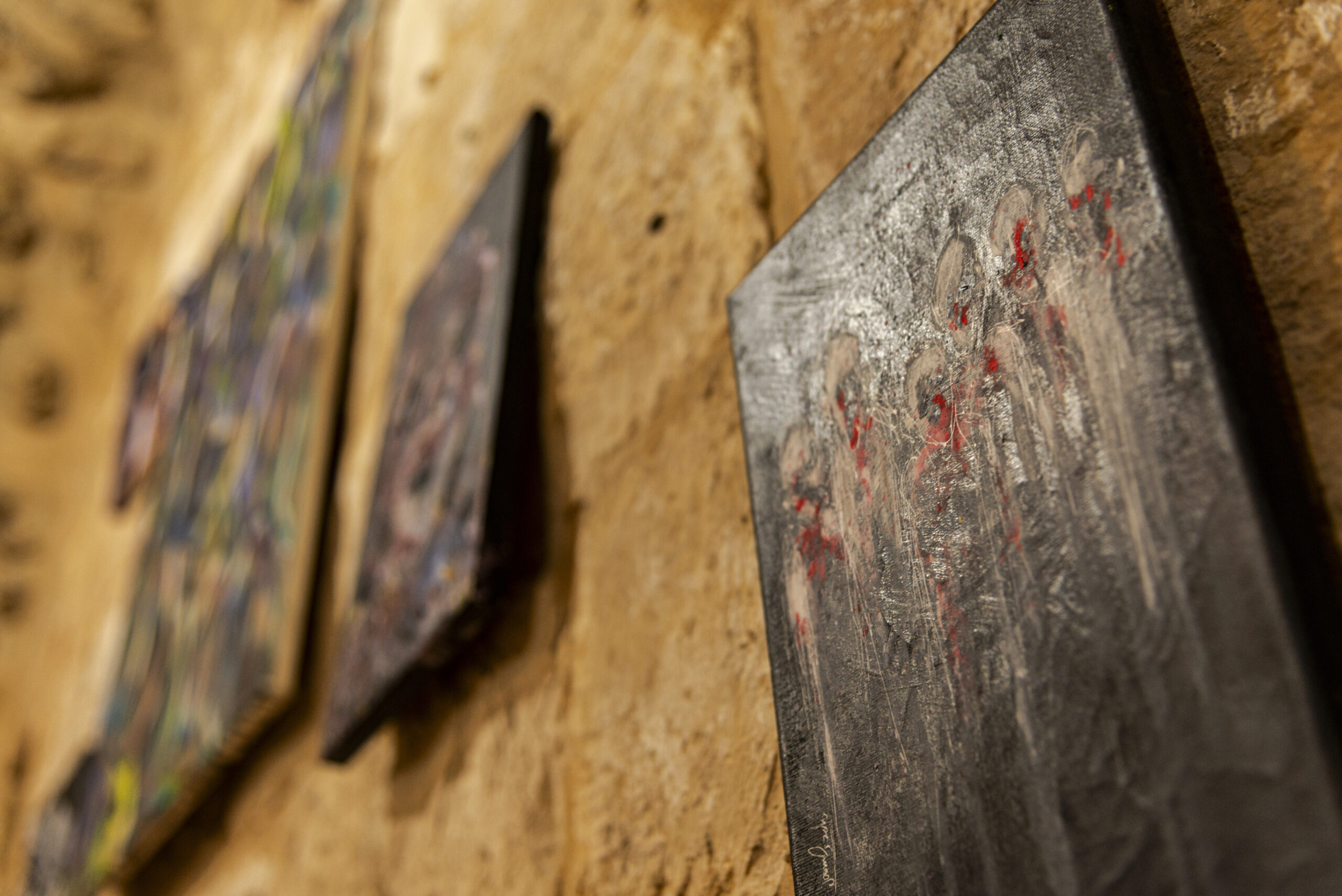
Inside one of these cafes I found a painting laboratory with dozens of paintings that tell of a place that, despite the difficulties of apartheid and occupation, does not intend to give in and, indeed, continues to prosper and resist.
The Resistance of Street Art and Urban Sports in the West Bank
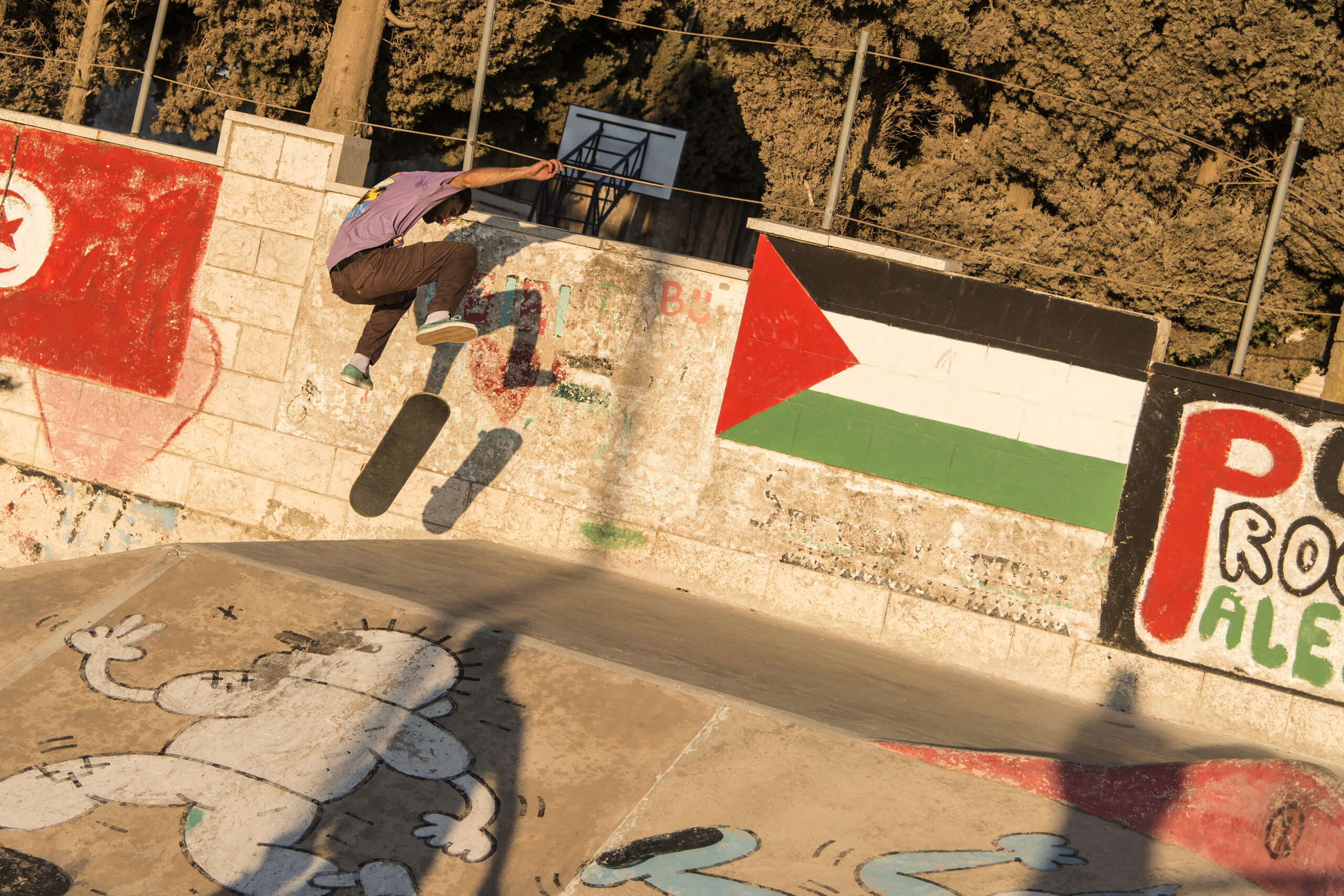
Not far from Nablus there is a special place. A skatepark packed with girls and boys learning skateboarding. Along with them, many international volunteers who do their utmost to give them lessons.
This form of resistance, through play, sport, the alternative use of the street and urban spaces, also gives life and vitality to a large and intergenerational group of Palestinians.
The skatepark also speaks to those who pass by, through the graffiti, the writings, the messages that demand a free Palestine.
A skateboarder jumps over a skatepark ramp next to a Palestinian flag and a graffiti by Handala.